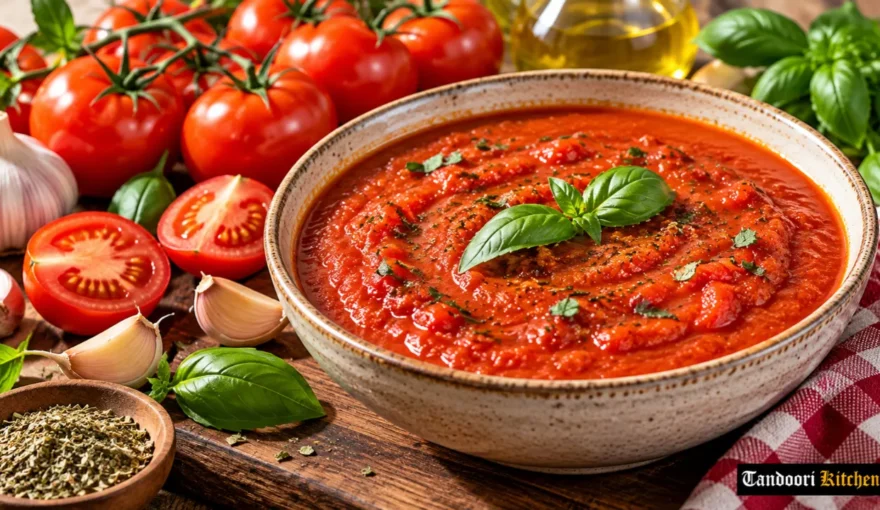
The One Tomato Sauce recipe by Tandoori Kitchen…
Every home cook needs one dependable tomato sauce. It should be easy enough for a weeknight, good enough for guests, and flexible enough to go on pasta, pizza, eggs, or a pan of roasted vegetables. This is that sauce.
It uses pantry staples, takes about 45 minutes (most of it hands-off), and freezes well. Once you’ve made it a few times, you won’t need the recipe.
Why This Tomato Sauce Works
Good tomato sauce comes from a few small choices, not a long ingredient list.

Whole canned tomatoes give the best texture. Whole peeled tomatoes are usually packed from better fruit than crushed or diced ones. Crushing them yourself lets you choose between a rustic, chunky sauce and a smooth one.
Olive oil carries the flavour. A generous pour of olive oil gives the sauce a rounded, silky finish. Garlic cooked gently in the oil flavours the whole pot.

A slow simmer concentrates the tomatoes. Simmering uncovered lets water evaporate, so the sauce thickens and the taste deepens without needing paste or sugar.
A small knob of butter at the end smooths out acidity. This step is optional, but it softens sharp edges, especially with tinned tomatoes that taste a little tinny.

Ingredients
Makes about 5 cups (enough for 1 kg pasta, or two meals for four people)
- 2 cans (800 g / 28 oz each) whole peeled tomatoes, with their juice
- ⅓ cup extra-virgin olive oil
- 5 garlic cloves, thinly sliced
- 1 small onion, finely chopped (optional, for a sweeter sauce)
- ¼ to ½ teaspoon red chilli flakes (optional)
- 1 teaspoon salt, plus more to taste
- ¼ teaspoon freshly ground black pepper
- 1 large sprig fresh basil, or 1 bay leaf
- 1 tablespoon unsalted butter (optional)
- ½ teaspoon sugar, only if needed
Equipment
- Large heavy-bottomed pot or deep pan
- Wooden spoon
- Potato masher or immersion blender
Step-by-Step Recipe
1. Crush the tomatoes. Pour the tomatoes into a large bowl and crush them with your hands or a potato masher. Remove any tough cores or bits of skin. Swirl a splash of water in each empty can and add it to the bowl.

2. Warm the oil and garlic. Set the pot over medium-low heat and add the olive oil and sliced garlic. Cook gently, stirring, for 2 to 3 minutes until the garlic is fragrant and just pale golden. Don’t let it brown, or the sauce will taste bitter.
3. Add onion and chilli (optional). If using onion, add it now with a pinch of salt and cook for 6 to 8 minutes until soft and translucent. Stir in the chilli flakes for the last 30 seconds.
4. Add the tomatoes. Pour in the crushed tomatoes, then add the salt, pepper, and basil sprig or bay leaf. Raise the heat and bring to a lively simmer.
5. Simmer until thick. Lower the heat so the sauce bubbles gently. Cook uncovered for 30 to 40 minutes, stirring every few minutes and scraping the bottom. The sauce is ready when it has thickened, the oil starts to pool at the edges, and the tomatoes have broken down.
6. Finish and season. Remove the basil or bay leaf. Stir in the butter, if using. Taste carefully: add more salt if it tastes flat, or the sugar if it still tastes sharp. For a smooth sauce, blend briefly with an immersion blender.
Time and Yield
- Prep time: 10 minutes
- Cook time: 35 to 45 minutes
- Total time: about 50 minutes
- Yield: about 5 cups
How to Use This Sauce
The real value of a single, reliable sauce is how many meals it makes easy.
- Pasta: Toss with spaghetti, rigatoni or penne, a ladle of pasta water, and grated Parmesan.
- Pizza: Simmer a little longer so it’s extra thick, then spread thinly on dough.
- Shakshuka-style eggs: Warm the sauce in a pan, make wells, crack in eggs, and cover until set.
- Baked dishes: Use it for lasagne, baked ziti, or chicken or aubergine parmesan.
- Quick soup: Thin with stock, add a splash of cream, and blend.
- Dipping sauce: Serve warm with garlic bread, fried mozzarella, or grilled vegetables.
Easy Variations
- Spicy arrabbiata: Double the chilli flakes and finish with chopped parsley.
- Rich and meaty: Brown 250 g minced meat or crumbled sausage before adding the tomatoes.
- Vodka sauce: Add 2 tablespoons vodka after the garlic, then stir in ½ cup cream at the end.
- Puttanesca-style: Add chopped olives, capers, and anchovies with the garlic.
- Fresh tomato version: In summer, swap in about 1.5 kg ripe peeled tomatoes and simmer a little longer.
Tips for the Best Tomato Sauce
- Buy the best whole tomatoes you can afford. They make the biggest difference.
- Keep the heat low when cooking garlic. Burnt garlic can’t be fixed.
- Use a wide pot. More surface area means faster thickening and deeper flavour.
- Salt in stages. Tomatoes vary, so always taste at the end.
- Make a double batch. It costs almost no extra effort and stocks your freezer.
Storage and Reheating
Cool the sauce completely before storing.
- Refrigerator: Keeps for up to 5 days in an airtight container.
- Freezer: Keeps for up to 3 months. Freeze in 1- or 2-cup portions for quick meals.
- Reheating: Warm gently on the stove, adding a splash of water if it has thickened too much.
Frequently Asked Questions
Can I use canned crushed tomatoes instead of whole tomatoes?
Yes. The sauce will be smoother and may cook a little faster. Whole tomatoes are still preferred because they usually taste fresher and give you more control over the texture.
Why does my tomato sauce taste bitter or sour?
Bitterness usually comes from overcooked garlic. Sourness comes from acidic tomatoes. A little butter or a pinch of sugar at the end, plus a longer simmer, will balance it.
Should I cover the pot while the sauce simmers?
No. Leave it uncovered so the water can evaporate. That’s how the sauce thickens and the flavour becomes richer.