Folic Acid Will Be Added to Most UK White Flour From 13 December: What It Means for Your Bread and Baking
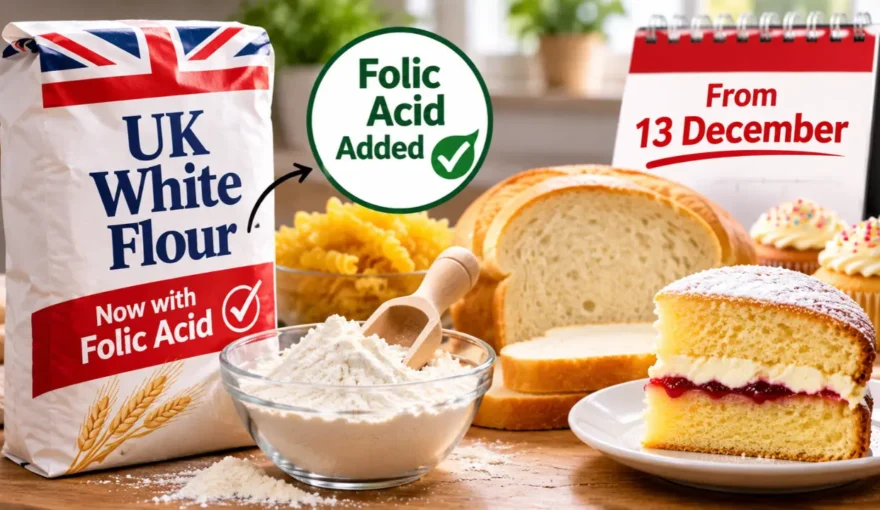
A major change is coming to one of the UK’s most everyday ingredients. From 13 December 2026, folic acid, a synthetic form of vitamin B9, must be added to most non-wholemeal wheat flour produced or sold in the UK. That means many white and brown breads, cakes, biscuits and other baked goods made with this flour will contain added folic acid. The move is designed to help prevent serious birth defects. Here’s what’s changing, why, and which foods are affected.
What Is Changing?
Under updates to the UK’s Bread and Flour Regulations, flour millers and producers must add folic acid to non-wholemeal common wheat flour at a level of 0.25mg per 100g of flour. The rules apply across England, Scotland, Wales and Northern Ireland.

This isn’t the first time UK flour has been fortified. Non-wholemeal wheat flour already has to contain added calcium, iron, thiamin (vitamin B1) and niacin (vitamin B3), a practice dating back to the Second World War. Folic acid will simply join that list.
Why Is Folic Acid Being Added?
Folic acid helps prevent neural tube defects, such as spina bifida, serious conditions that affect a baby’s brain and spine and develop very early in pregnancy, often before a woman knows she’s pregnant.
Around half of pregnancies in the UK are unplanned, which means many women don’t start taking folic acid supplements early enough. Adding it to flour acts as a safety net for the wider population. The UK Government estimates the change could prevent around 200 cases of neural tube defects each year, and the Food Standards Agency expects it to reduce rates by about 20%.
The UK is following more than 60 countries, including Australia, Canada and the U.S., that already fortify wheat flour with folic acid.
Which Foods Will Be Affected?
Products made with non-wholemeal common wheat flour will be affected, including many:
- White and brown breads
- Rolls, wraps and bagels
- Cakes, biscuits and pastries
- Pizza bases and some baked goods
What Is Exempt?
Not all flour or flour-based products are covered:
- Wholemeal flour is exempt, as it naturally contains more folate.
- Gluten-free products are not subject to mandatory fortification.
- Flours made from other grains, such as spelt or soya, are not covered.
- Most dried pasta is made from durum wheat semolina rather than common wheat flour, so it isn’t generally covered. Check the ingredients list to be sure.
How to Tell If Folic Acid Has Been Added

Added vitamins and minerals must be listed in the ingredients. Fortified flour will typically read something like: Wheat Flour (Wheat Flour, Calcium Carbonate, Iron, Niacin, Thiamin, Folic Acid). If folic acid isn’t listed, it hasn’t been added.
Some products already contain fortified flour, as manufacturers have been making the switch ahead of the deadline. Flour and bread labelled and placed on sale before 13 December can still be sold until stocks run out, so you may see both versions on shelves for a while.
Folic Acid Flour Changes at a Glance
| Detail | What It Means |
|---|---|
| Start date | 13 December 2026 |
| What’s added | Folic acid (synthetic vitamin B9) |
| Amount | 0.25mg per 100g of flour |
| Flour covered | Non-wholemeal common wheat flour (white and brown) |
| Exempt | Wholemeal flour, gluten-free products, other grain flours |
| Pasta | Most dried pasta uses durum wheat, which isn’t generally covered |
| Where it applies | England, Scotland, Wales and Northern Ireland |
| Main aim | Reduce neural tube defects such as spina bifida |
| Expected impact | Around 200 fewer cases a year (government estimate) |
Should Pregnant Women Still Take Supplements?
Yes. Health authorities stress that fortified flour is a safety net, not a replacement. The amount of folic acid in bread and other foods isn’t enough on its own to give full protection. The NHS advises women who are pregnant or trying to conceive to take a daily folic acid supplement before conception and for the first 12 weeks of pregnancy.
Not Everyone Is in Favour
While health authorities consider folic acid fortification safe and evidence-based, the policy has drawn some criticism. A petition calling for an end to mandatory fortification was launched in 2026. The government responded by describing fortification as an evidenced public health measure, not a medical intervention. People who prefer to avoid added folic acid can choose wholemeal or other exempt products and check ingredient labels.
The Bottom Line
From 13 December 2026, most white and brown wheat flour in the UK will contain added folic acid, meaning many everyday breads and baked goods will too. The change aims to reduce serious birth defects by boosting folic acid intake across the population. Wholemeal flour, gluten-free products and most durum wheat pasta are exempt, and anyone planning a pregnancy should still take a daily folic acid supplement.
FAQ
When will folic acid be added to UK flour?
From 13 December 2026, folic acid must be added to most non-wholemeal common wheat flour produced or sold in the UK.
Will all bread and pasta contain folic acid?
No. Wholemeal flour and gluten-free products are exempt, and most dried pasta is made from durum wheat, which isn’t generally covered. Check ingredient labels to be sure.
Why is folic acid being added to flour?
To help prevent neural tube defects such as spina bifida. The government estimates it could prevent around 200 cases each year.
Do pregnant women still need folic acid supplements?
Yes. Fortified flour doesn’t provide enough on its own, so the NHS still recommends daily folic acid supplements before and during early pregnancy.
Bolded anchor phrases to link: 13 December 2026, folic acid, Bread and Flour Regulations, non-wholemeal common wheat flour, 0.25mg per 100g of flour, neural tube defects, 200 cases of neural tube defects each year, wholemeal flour, gluten-free products, most dried pasta, safety net, not a replacement.
Source: Click here to view source