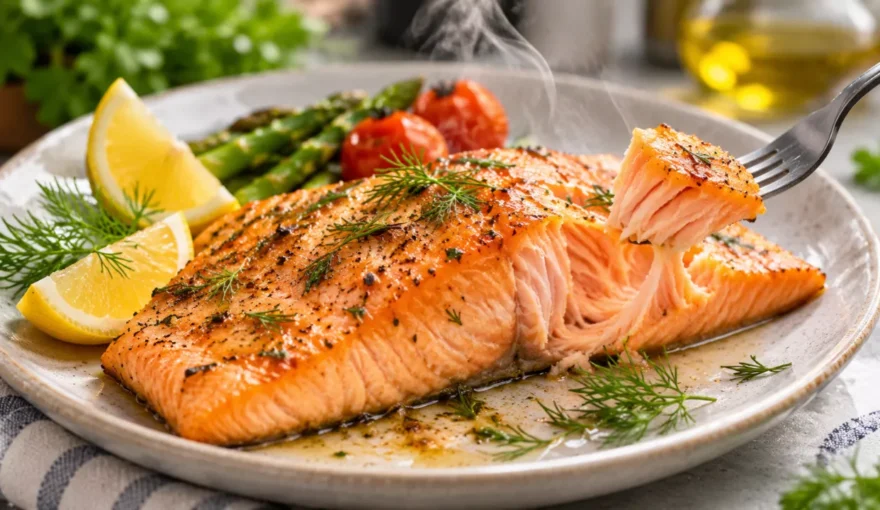
Salmon will be tender and juicy every time if you stop frying for chef’s simple method
Most of us have had it happen. You buy a good salmon fillet, cook it with care, and end up with something dry and chalky. The fish usually isn’t the problem. It’s the method, and the fixes are easier than you’d think.
Salmon is an oily fish, so it should be naturally moist. Its fat keeps it tender up to a point. Go past that point by even a minute or two and the muscle fibres tighten and push out the moisture you wanted to keep. Here’s how to stop that happening.
Take the Chill Off First

Fish cooked straight from the fridge cooks unevenly. The outside overcooks while the centre is still catching up. Leave your fillets on the counter for 10 to 15 minutes before cooking. That’s long enough to take the chill off without causing any food safety worries, and the fillet will cook more evenly from edge to centre.
While it rests, pat it dry with kitchen paper. A dry surface browns faster, so it spends less time in the heat.
Give It a Quick Brine
Restaurant kitchens have used this trick for years. A short brine seasons the fish all the way through and helps it hold onto moisture as it cooks.
You don’t need anything fancy. Stir about one tablespoon of salt into four cups of cold water. Leave the salmon in it for 15 minutes, no longer, then rinse and dry it. If you’d rather skip the water, a light sprinkle of salt 20 minutes before cooking does a similar job.
The brine also cuts down on the white stuff that seeps out of salmon as it cooks. That’s a protein called albumin. A little is harmless, but a lot of it means the fish has been squeezed too hard by the heat.
Lower the Heat
High heat is fast, but it doesn’t forgive much. If you have time, slow-roasting is one of the most reliable ways to get soft, buttery salmon. Set your oven to around 135°C (275°F) and cook the fillet for about 20 to 25 minutes. It comes out evenly pink and almost silky, with very little risk of drying out.

If you love crispy skin, use a hot pan but don’t touch the fish. Put it skin-side down in a well-heated pan with a little oil and let it cook mostly on that side. Flip it right at the end for just 30 seconds or so.
Use a Thermometer, Not a Timer
This one change makes the biggest difference. Fillets vary in thickness, so cooking times can only ever be a rough guide. A cheap probe thermometer takes away the guesswork.

For moist, just-set salmon, take it off the heat when the thickest part reads about 50–52°C (122–125°F). It keeps cooking a little as it rests. If you prefer it fully firm, or you’re following official food safety guidance, aim for 63°C (145°F). Just remember the texture will be drier.
Add a Protective Layer
Fat and sugar both help shield salmon from harsh heat. Brushing on butter, olive oil, pesto, or a honey-and-mustard glaze puts a thin barrier between the fish and the heat. Baking it in a foil or parchment parcel with lemon slices and herbs works even better, because the fish gently steams in its own juices.
Cooking Methods Compared
| Method | Temperature | Approx. Time (2.5cm fillet) | Juiciness | Best For |
|---|---|---|---|---|
| Slow-roasting | 135°C / 275°F | 20–25 mins | Very high | Dinner parties, beginners |
| Baking in foil/parchment | 200°C / 400°F | 12–15 mins | High | Hands-off weeknight meals |
| Pan-searing | Medium-high | 6–8 mins | Medium-high | Crispy skin lovers |
| Air frying | 190°C / 375°F | 8–10 mins | Medium | Quick lunches |
| Poaching | Gentle simmer | 8–10 mins | Very high | Salads, light meals |
| Grilling/BBQ | High direct heat | 8–10 mins | Medium | Smoky flavour |
Let It Rest
Just as with steak, give salmon two or three minutes on the plate before you cut into it. The juices settle back into the flesh instead of running out the moment your fork goes in.
Juicy salmon isn’t about luck or expensive kit. Start with room-temperature fish, add a quick brine if you have time, use gentler heat, and take it off a touch earlier than you think. Get those habits down and dry, chalky fillets should be a thing of the past.
Frequently Asked Questions
Why does my salmon always turn out dry?
Almost always, it’s overcooked. Salmon goes from moist to dry in a minute or two, so a thermometer and pulling it off the heat at around 50–52°C makes a big difference.
Should I cook salmon skin-side up or down?
Skin-side down, especially in a pan. The skin protects the delicate flesh from direct heat and turns crisp as it cooks.
What is the white stuff that comes out of salmon?
It’s albumin, a protein pushed out when the muscle fibres tighten under heat. A quick brine and gentler cooking will keep it to a minimum.
Can I make frozen salmon juicy?
Yes. Thaw it fully in the fridge overnight, then pat it dry before cooking. Cooking it from frozen often leaves the outside dry before the centre is done.