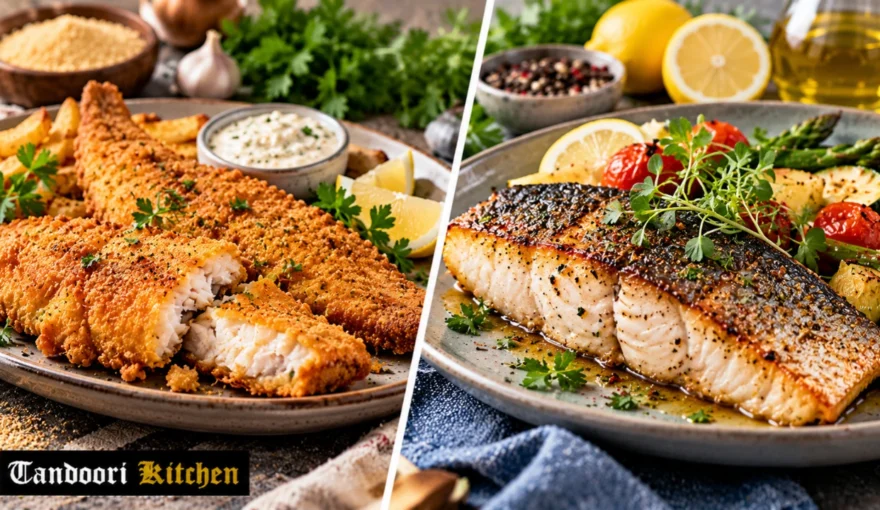
American Catfish vs. Australian Barramundi — Which Fish Is Better for Dinner?
Catfish is a Southern American staple, rolled in cornmeal, fried until golden, and served with hush puppies and hot sauce. Barramundi is Australia’s favorite dinner fish, a mild, buttery fillet that is pan-seared, grilled, or baked and usually served with lemon. Both are affordable, easy to cook, and mild enough to win over people who say they don’t like fish.
They are quite different on the plate, though. Catfish is firm, dense, and slightly sweet, with a flavor that stands up to bold seasoning and frying. Barramundi is moister and more delicate, with large, soft flakes and crisp skin when seared. Both are mostly farmed, which keeps prices steady and supply reliable.
Neither is the clear winner for every dinner. The table below compares them side by side, and the sections after it explain how they differ in taste, nutrition, cooking, and sourcing, so you can choose the right one for tonight.

American Catfish vs. Australian Barramundi at a Glance
| Factor | American catfish | Australian barramundi |
|---|---|---|
| Species | Channel catfish (freshwater) | Asian sea bass (Lates calcarifer); lives in fresh and salt water |
| Where it comes from | Mostly farmed in ponds in the southern US (Mississippi, Alabama, Arkansas) | Wild and farmed in northern Australia and Southeast Asia; also farmed in the US |
| Flavor | Mild, slightly sweet; can taste earthy if poorly raised | Mild, buttery, clean |
| Texture | Firm, dense, meaty | Moist, with large, soft flakes |
| Skin | Usually removed | Crisps well when seared |
| Best cooking methods | Frying, blackening, baking, grilling | Pan-searing, grilling, baking, steaming |
| Fat | Moderate (farmed fillets are fattier) | Low to moderate |
| Calories (per 100 g, cooked) | About 150 (farmed) | About 130 to 150 (varies by source) |
| Protein (per 100 g, cooked) | About 18 to 20 g | About 20 to 24 g |
| Typical price | Lower | Higher |
| Availability | Common in US supermarkets | Often frozen or in specialty and larger stores outside Australia |
Approximate values based on food composition data. Exact numbers vary by farm, feed, cut, and cooking method, so check the label on your product.
Taste and Texture
Catfish has a mild, faintly sweet flavor and a firm, dense flesh that holds together in a hot pan or a deep fryer. It takes on seasoning well, which is why cornmeal crusts, Cajun spice, and spicy sauces are classic partners. Well-raised catfish tastes clean, but fish from poorly managed ponds can have a muddy, earthy note. Soaking fillets in buttermilk or lightly salted water for 30 minutes helps if you are sensitive to it.

Barramundi is mild and buttery, with moist, white, large-flaked flesh. The skin turns crisp and crackly when seared, and many cooks consider it the best part. It is less forgiving than catfish when overcooked, because it dries out quickly, but it is easy to cook well with a hot pan and a short cook time.
If you like a firm, hearty fish that can handle bold flavors, choose catfish. If you want a delicate, restaurant-style fillet, choose barramundi.

Nutrition Compared
Both are lean, high-protein options that fit into a healthy diet.
- Protein. Both provide roughly 18 to 24 g per 100 g cooked, depending on the fish and the source of the data.
- Calories and fat. Farmed catfish is a little higher in fat and calories than wild catfish, and barramundi is generally leaner, though numbers vary a lot between farms.
- Omega-3s. Neither is as rich in omega-3 fats as salmon, sardines, or mackerel. Barramundi usually provides a moderate amount, and farmed catfish provides less, depending on its feed. If omega-3s are your priority, fatty fish are the better choice.
- Vitamins and minerals. Both provide B12, selenium, phosphorus, and potassium, and catfish is a notable source of B12 and choline.
- Mercury. Both are low-mercury fish, which makes them suitable for regular eating, including for pregnant women, in line with standard guidance.
As always, the cooking method changes the nutrition more than the species. A baked barramundi fillet and a deep-fried catfish fillet are very different meals.
Sourcing and Sustainability
Most catfish sold in the US is farmed in freshwater ponds in the southern states, and domestic farmed catfish is generally regarded as a responsible choice. A US labeling rule limits the name “catfish” to a specific family of fish, and imported fish such as basa and swai are different species, so they are labeled differently.

Barramundi is both wild-caught and farmed. Australian wild barramundi is a prized sport and table fish, and farmed barramundi is raised in Australia, Southeast Asia, and the US, often in tanks or ponds. The quality of farming practices varies, so look for certification such as ASC or BAP for farmed fish, or MSC for wild-caught, and check the country of origin.
In both cases, certifications and a trusted seller tell you more than the species name.
Cost and Availability
Catfish is usually one of the cheapest fish in US supermarkets and is easy to find fresh or frozen. Barramundi costs more and, outside Australia, is typically sold frozen or at larger or specialty stores. In Australia, barramundi is common in supermarkets and fish shops, while catfish is rarely eaten.
How to Cook Each One
Southern-style fried catfish (serves 4). Soak 4 catfish fillets (about 150 g each) in buttermilk for 30 minutes. Mix 1 cup cornmeal, ¼ cup flour, 1 teaspoon each of salt, paprika, and garlic powder, and ½ teaspoon black pepper. Drain the fillets, press them into the mixture, and shallow-fry in 1 inch of oil at 175°C (350°F) for 3 to 4 minutes per side until golden and the flesh flakes. Drain on a rack and serve with lemon, hot sauce, and coleslaw.
Pan-seared barramundi with lemon butter (serves 4). Pat 4 barramundi fillets (about 150 g each, skin on) very dry and season with salt and pepper. Heat 1 tablespoon oil in a skillet over medium-high heat and place the fillets skin side down, pressing lightly for 10 seconds. Cook for 4 to 5 minutes until the skin is crisp and the flesh is opaque about two-thirds of the way up, then flip and cook for 1 to 2 minutes. Add 1 tablespoon of butter, the juice of half a lemon, and a spoonful of chopped parsley to the pan, and spoon the sauce over the fish.
Tips for Cooking Either Fish
- Pat fillets dry. Dry fish browns better and sticks less.
- Don’t overcook. Fish is done when it turns opaque and flakes with a fork, at about 63°C (145°F). Carryover heat keeps cooking it off the stove.
- Use a hot pan, then rest. High heat gives color, and a minute of rest evens out the cooking.
- Season generously. Both are mild and take well to herbs, citrus, garlic, and spices.
- Don’t crowd the pan. Crowding steams the fish instead of searing it.
- Check the thawing. Thaw frozen fillets overnight in the fridge and pat dry before cooking.
- Healthier options: Baking, grilling, steaming, or air-frying cut the fat compared with deep frying.
Which Is Better for Dinner?
- For crispy, Southern comfort food: catfish.
- For a quick, elegant weeknight fillet: barramundi.
- For the lowest price: catfish.
- For crispy skin: barramundi.
- For bold seasoning and frying: catfish.
- For a mild fish picky eaters often like: both, though barramundi’s buttery taste is especially gentle.
- For omega-3s: neither is top-tier, so add salmon or sardines during the week.
So, Which Should You Choose?
Neither is better overall. Pick catfish when you want a firm, affordable fish for frying, blackening, or Cajun-style cooking. Pick barramundi when you want a delicate, buttery fillet with crispy skin and a more refined feel. If you can find both, try each in the style it was made for, and choose responsibly farmed or certified fish whichever you buy.
People with fish allergies must avoid both, and people who are pregnant or have a health condition that limits fish or sodium should check with a doctor or dietitian about suitable choices and amounts.
Frequently Asked Questions
Is barramundi healthier than catfish?
Both are lean, low-mercury, and high in protein. Barramundi is usually a little leaner and has moderate omega-3s, while farmed catfish is slightly higher in fat. The cooking method matters more, since baked or grilled fish is much lighter than fried.
Does catfish taste muddy?
Well-raised catfish tastes mild and slightly sweet, but fish from poorly managed ponds can taste earthy. Buying from a trusted source and soaking the fillets in buttermilk or lightly salted water for 30 minutes before cooking helps.
Can I substitute barramundi for catfish, or the other way around?
Yes, with adjustments. Barramundi is more delicate, so it cooks faster and suits pan-searing or baking. Catfish holds up better in frying and in stews. For a similar fish in recipes, firm white fish such as snapper, tilapia, or sea bass also work.
Is barramundi the same as sea bass?
It is sometimes sold as Asian sea bass, but it is not the same as Chilean sea bass, which is a different fish. Always check the label or ask the seller if you need a specific species for a recipe.