Walnuts vs Pumpkin Seeds vs Figs: Which Superfood Deserves a Spot in Your Daily Diet?
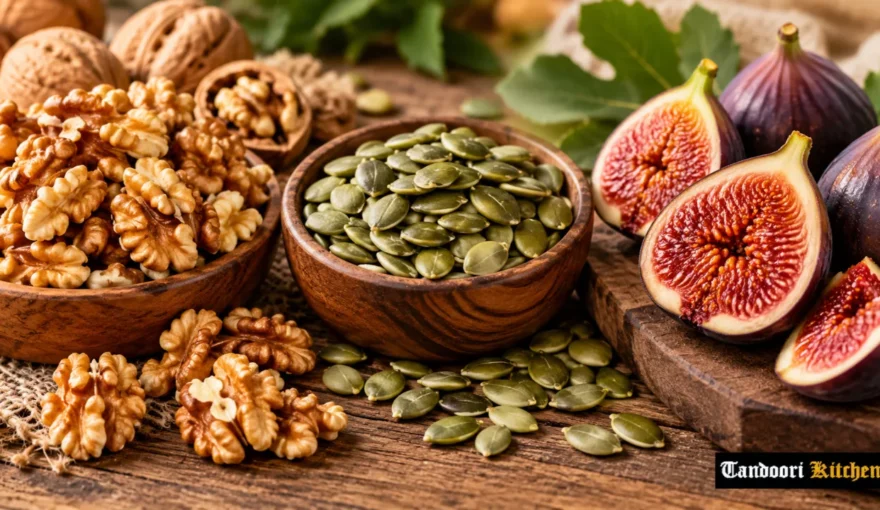
Walnuts and pumpkin seeds both sit high on the list of healthy snacks. You can toss them into salads, blend them into smoothies or simply eat a handful between meals. However, they are not nutritional twins. Each one brings its own strengths to your plate.
In this walnut vs pumpkin seed comparison, we break down calories, protein, healthy fats, vitamins and minerals. As a result, you can decide which one fits your health goals better. In many cases, the smartest choice is to eat both.
Quick Overview: Walnut vs Pumpkin Seed
Before we dig into the numbers, here is the short version.
- Walnuts win on omega-3 fats, vitamin B6 and folate.
- Pumpkin seeds win on protein, magnesium, zinc, iron, phosphorus and potassium.
- Pumpkin seeds also contain fewer calories and less fat per serving.
In other words, walnuts shine for heart and brain support. Meanwhile, pumpkin seeds act like a compact mineral supplement.
Nutrition Facts Per Serving (1 oz / 28 g)
A standard serving of nuts or seeds is about one ounce. That equals roughly 14 walnut halves or a small handful of shelled pumpkin seeds. The table below shows approximate values for raw, unsalted versions.

Calories and Macronutrients
| Nutrient | Walnut (28 g) | Pumpkin Seed (28 g) |
|---|---|---|
| Calories | 183 kcal | 157 kcal |
| Protein | 4.3 g | 8.5 g |
| Total fat | 18.3 g | 13.7 g |
| Saturated fat | 1.7 g | 2.4 g |
| Monounsaturated fat | 2.5 g | 4.5 g |
| Polyunsaturated fat | 13.2 g | 5.9 g |
| Omega-3 (ALA) | 2.5 g | 0.03 g |
| Omega-6 (linoleic acid) | 10.7 g | 5.8 g |
| Total carbohydrates | 3.8 g | 3.0 g |
| Dietary fiber | 1.9 g | 1.7 g |
| Sugar | 0.7 g | 0.4 g |
| Cholesterol | 0 mg | 0 mg |
| Water | 1.1 g | 1.5 g |
Vitamins
| Vitamin | Walnut (28 g) | Pumpkin Seed (28 g) |
|---|---|---|
| Vitamin A | 0.3 mcg RAE | 0.3 mcg RAE |
| Vitamin C | 0.4 mg | 0.5 mg |
| Vitamin E | 0.2 mg | 0.6 mg |
| Vitamin K | 0.8 mcg | 2.0 mcg |
| Thiamin (B1) | 0.10 mg | 0.08 mg |
| Riboflavin (B2) | 0.04 mg | 0.04 mg |
| Niacin (B3) | 0.3 mg | 1.4 mg |
| Pantothenic acid (B5) | 0.16 mg | 0.21 mg |
| Vitamin B6 | 0.15 mg | 0.04 mg |
| Folate (B9) | 27 mcg | 16 mcg |
| Choline | 11 mg | 18 mg |
Minerals
| Mineral | Walnut (28 g) | Pumpkin Seed (28 g) |
|---|---|---|
| Calcium | 27 mg | 13 mg |
| Iron | 0.8 mg | 2.5 mg |
| Magnesium | 44 mg | 166 mg |
| Phosphorus | 97 mg | 345 mg |
| Potassium | 123 mg | 227 mg |
| Sodium | 1 mg | 2 mg |
| Zinc | 0.9 mg | 2.2 mg |
| Copper | 0.44 mg | 0.38 mg |
| Manganese | 0.96 mg | 1.27 mg |
| Selenium | 1.4 mcg | 2.6 mcg |
Nutrition Facts Per 100 g
| Nutrient | Walnut (100 g) | Pumpkin Seed (100 g) |
|---|---|---|
| Calories | 654 kcal | 559 kcal |
| Protein | 15.2 g | 30.2 g |
| Total fat | 65.2 g | 49.1 g |
| Saturated fat | 6.1 g | 8.7 g |
| Monounsaturated fat | 8.9 g | 16.2 g |
| Polyunsaturated fat | 47.2 g | 21.0 g |
| Carbohydrates | 13.7 g | 10.7 g |
| Fiber | 6.7 g | 6.0 g |
| Sugar | 2.6 g | 1.4 g |
| Calcium | 98 mg | 46 mg |
| Iron | 2.9 mg | 8.8 mg |
| Magnesium | 158 mg | 592 mg |
| Phosphorus | 346 mg | 1,233 mg |
| Potassium | 441 mg | 809 mg |
| Zinc | 3.1 mg | 7.8 mg |
| Vitamin B6 | 0.54 mg | 0.14 mg |
| Folate | 98 mcg | 58 mcg |
| Glycemic index | Low (about 15) | Low (about 25) |
Values are approximate and may vary by variety, growing conditions and processing.
Calories and Fat: Which Is Lighter?
Pumpkin seeds are the lighter option. A one-ounce serving has about 26 fewer calories than the same amount of walnuts. That gap comes mostly from fat, since walnuts carry more of it.

Still, the type of fat matters more than the amount. Walnuts are loaded with polyunsaturated fat, which supports healthy cholesterol levels. Pumpkin seeds, on the other hand, offer a more balanced mix of mono- and polyunsaturated fats. Both are far better choices than chips or cookies.
Protein: Pumpkin Seeds Take the Lead
If protein is your priority, pumpkin seeds win easily. They provide nearly double the protein of walnuts. A single handful gives you about 8.5 grams, similar to one large egg plus a little extra.
For this reason, pumpkin seeds work well for vegetarians, vegans and active people. You can sprinkle them on oatmeal or yogurt for a quick protein boost. Walnuts still add some protein, but they are better known for their fats.
Omega-3 Fats: Walnuts Stand Out
This is where walnuts truly shine. They are one of the richest plant sources of alpha-linolenic acid (ALA), a type of omega-3 fat. One ounce covers more than the daily adequate intake for most adults.

Pumpkin seeds, by contrast, contain only a trace of omega-3. Omega-3 fats help support heart health, reduce inflammation and may benefit brain function. Therefore, if you rarely eat fatty fish, walnuts can help fill that gap.
Minerals: Pumpkin Seeds Are a Powerhouse
Pumpkin seeds dominate the mineral comparison. Here is how they stack up:
- Magnesium: nearly four times more than walnuts. Magnesium supports muscle function, sleep and blood sugar control.
- Zinc: more than double. Zinc helps your immune system and wound healing.
- Iron: about three times more. This makes pumpkin seeds useful for plant-based eaters.
- Phosphorus and potassium: much higher, which supports bone and heart health.
Walnuts do have a small edge in calcium and copper. However, the overall mineral score clearly favors pumpkin seeds.
Vitamins: A Closer Contest
Neither food is a major vitamin source, yet each has a few highlights. Walnuts provide more vitamin B6 and folate. These B vitamins help with energy metabolism and red blood cell formation.
Pumpkin seeds, meanwhile, contain more niacin, vitamin E and vitamin K. They also offer slightly more choline. Overall, this round is close to a draw.
Carbs, Fiber and Blood Sugar
Both foods are low in carbohydrates and sugar. They also have a low glycemic index, so they will not cause sharp spikes in blood sugar. Walnuts contain slightly more fiber, while pumpkin seeds have slightly fewer carbs.
As a result, both fit well into low-carb, keto and diabetic-friendly eating plans. Just keep an eye on portion size, because calories add up quickly.
Health Benefits at a Glance
Walnuts may help to:
- support heart health thanks to omega-3 fats
- improve cholesterol balance
- support brain function and memory
- provide antioxidants such as polyphenols
Pumpkin seeds may help to:
- improve sleep quality through magnesium and tryptophan
- strengthen immunity with zinc
- support prostate and bladder health
- boost iron and protein intake on plant-based diets
Walnut vs Pumpkin Seed: Which Should You Choose?
The right answer depends on your goals. Choose walnuts if you want more omega-3 fats for your heart and brain. Pick pumpkin seeds if you need extra protein, magnesium, zinc or iron.
That said, you do not have to choose just one. A mix of both gives you the best of each. For example, try a trail mix with walnuts and pumpkin seeds, or add both to a salad. Keep portions to about one ounce per day, and choose raw or dry-roasted versions without added salt.
Walnuts and pumpkin seeds are both nutrient-dense foods that deserve a place in a balanced diet. Walnuts lead on omega-3 fats, B6 and folate. Pumpkin seeds, in turn, lead on protein and almost every key mineral. When you combine them, you get a well-rounded snack that supports your heart, muscles, immunity and energy.