Seafood vs. Beef: Which Has More Protein? Nutrition, Benefits, and Key Differences
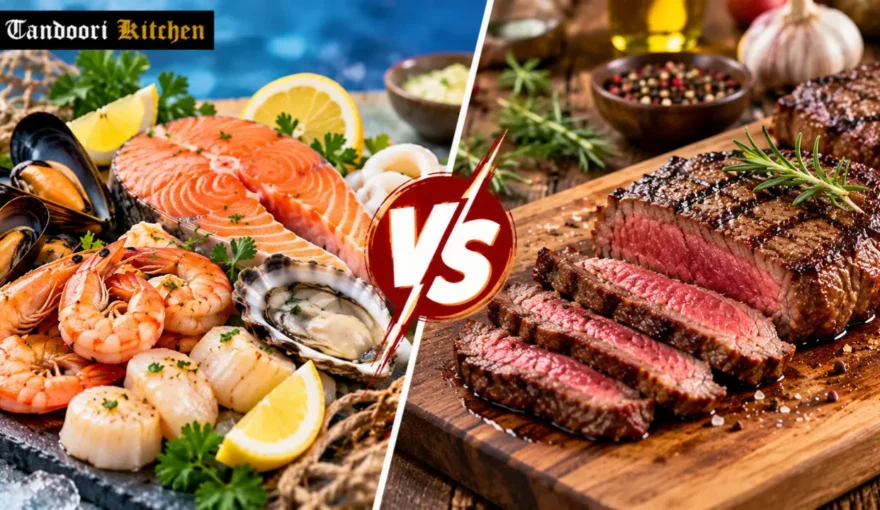
Seafood and beef are two of the most popular high-protein foods, and people often wonder which one gives you more. The short answer is that they are very close. A serving of lean beef and a serving of many fish and shellfish provide a similar amount of protein, and a few types of seafood match or beat beef.
The real differences show up elsewhere. Seafood tends to deliver the same protein with fewer calories and less saturated fat, and it brings omega-3 fats, iodine, and vitamin D. Beef offers more easily absorbed iron and zinc. The type of seafood and the cut of beef matter far more than the category.
The table below compares common choices side by side, and the sections after it explain what the numbers mean, where each food excels, and how to build a balanced plate.

Protein and Nutrition at a Glance
| Food (per 100 g, cooked) | Calories | Protein | Fat | Saturated fat | Standout nutrients |
|---|---|---|---|---|---|
| Lean beef sirloin (trimmed) | ~185 | ~28 g | ~8 g | ~3 g | Iron, zinc, B12 |
| Ground beef (85% lean) | ~250 | ~26 g | ~15 g | ~6 g | Iron, zinc, B12 |
| Ribeye steak | ~290 | ~25 g | ~20 g | ~8 g | Iron, zinc, B12 |
| Yellowfin tuna | ~130 | ~29 g | ~1 g | ~0.3 g | Selenium, niacin, B12 |
| Salmon (Atlantic, farmed) | ~206 | ~22 g | ~12 g | ~2.5 g | Omega-3s, vitamin D, B12 |
| Cod | ~105 | ~23 g | <1 g | ~0.2 g | Iodine, selenium, B12 |
| Shrimp | ~99 | ~24 g | ~0.3 g | ~0.1 g | Selenium, iodine, choline |
| Sardines (canned) | ~208 | ~25 g | ~11 g | ~1.5 g | Omega-3s, calcium, vitamin D |
Approximate values based on USDA data for cooked portions. Exact numbers vary by cut, species, and cooking method. Cooked values are higher than raw because cooking removes water.
The pattern is clear: lean beef and most seafood sit in the same range of about 22 to 29 g of protein per 100 g, with tuna at the top. Seafood generally does it with far fewer calories.

Which Has More Protein?
Per 100 g, it’s nearly a tie. Lean beef provides roughly 26 to 29 g. Tuna, including yellowfin and canned tuna in water, reaches the high 20s. Shrimp, cod, haddock, and salmon land in the low-to-mid 20s. So the claim that beef always has more protein is not true, and tuna can beat many cuts of beef.
Per calorie, seafood wins. Shrimp gives about 24 g of protein for roughly 99 calories, while ground beef gives about 26 g for roughly 250 calories. If you are trying to get more protein for fewer calories, as in weight loss, lean fish and shellfish are the most efficient choices.
Raw vs. cooked matters. Raw meat and fish contain more water, so protein per 100 g looks lower on a nutrition label for raw products. Compare foods in the same state, either both raw or both cooked, to avoid confusion.
Portion size changes the picture. A typical beef steak or burger is often 150 to 250 g, while a fish fillet is usually 120 to 180 g. People tend to eat more beef by weight per meal, which can make beef meals look higher in protein even though the food itself isn’t far ahead.
Protein Quality
Both beef and seafood are complete proteins, meaning they supply all nine essential amino acids in good proportions, and both are highly digestible. Neither has a meaningful edge in protein quality for the average person. Fish and shellfish proteins are also generally easy to digest because they contain less connective tissue than red meat.
Where Seafood Wins
- Omega-3 fats. Fatty fish such as salmon, sardines, mackerel, and trout provide EPA and DHA, which are linked to lower triglycerides and better heart and brain health. Beef has very little.
- Lower saturated fat. Most fish and shellfish have much less saturated fat than beef, which helps heart health.
- Iodine and selenium. Seafood is one of the best sources of iodine, which supports the thyroid, and of selenium.
- Vitamin D. Fatty fish are among the few good food sources of vitamin D.
- Fewer calories per gram of protein. Lean white fish and shellfish are especially light.
- Evidence for heart benefits. Eating fish regularly is consistently linked to a lower risk of heart disease in studies.
Where Beef Wins
- Heme iron. Beef is rich in heme iron, the form the body absorbs most easily, which helps prevent iron deficiency, especially in women and active people.
- Zinc. A serving of beef delivers several times the zinc of most fish, supporting immunity and wound healing.
- Vitamin B12. Beef is an excellent source, though some shellfish such as clams and fish such as sardines and trout are even higher.
- Creatine and carnosine. Red meat contains small amounts of these compounds, which are used in muscle energy.
- Satiety and flavor. Many people find beef very filling, which makes it easy to meet protein goals.
The Downsides to Know About
Beef. Fatty cuts and ground beef carry a lot of saturated fat, and high intake of red meat is linked to a higher risk of heart disease and colorectal cancer, especially when it is processed (sausages, salami, bacon). Many health guidelines suggest limiting cooked red meat to about 350 to 500 g (12 to 18 oz) a week and avoiding processed meat.
Seafood. Some large predatory fish, such as swordfish, shark, king mackerel, and some tuna, contain more mercury, so pregnant women and young children should limit them. Shellfish allergies are common and can be severe. Fried, battered, or heavily sauced seafood loses much of its advantage, and raw shellfish carries a food-poisoning risk.
Cooking Matters
How you cook protein can change its healthiness more than the type.
- Better methods: baking, grilling, steaming, poaching, roasting, and quick stir-frying with a little oil.
- Limit: deep frying, heavy breading, creamy sauces, and charring at very high heat.
- For beef: choose lean cuts such as sirloin, round, or tenderloin, trim visible fat, and marinate before grilling.
- For seafood: avoid overcooking, which makes fish dry and shrimp rubbery. Most fish is done at 63°C (145°F), and flakes easily.
Which Is Better for Your Goals?
- Muscle building: both work well. Choose whichever you will actually eat, and include variety.
- Weight loss: lean fish, shrimp, and tuna give the most protein for the fewest calories.
- Heart health: seafood, especially fatty fish twice a week, has the stronger evidence.
- Iron or zinc deficiency: lean beef is the easier food source, though shellfish such as oysters and clams are also rich in zinc and iron.
- Budget: canned tuna, sardines, and frozen fish are affordable, and so are cheaper cuts of beef such as chuck and ground beef.
- Convenience: canned fish and frozen shrimp are fast, and ground beef is easy to cook in many ways.
So, Which Should You Choose?
For protein alone, there is no clear winner, because lean beef and many seafoods are very close and tuna can top both. For overall health, the best approach is to mix them: eat fish or shellfish a few times a week, include lean beef occasionally, and fill the rest of your plate with vegetables, beans, and whole grains.
A simple weekly pattern might be fatty fish twice, other seafood or white fish once or twice, lean red meat once or twice, and other protein sources such as eggs, poultry, beans, and lentils on the remaining days.
People with kidney disease, gout, high cholesterol, heart disease, or a shellfish allergy, as well as pregnant women, should check with a doctor or dietitian about which proteins and amounts suit them.
Frequently Asked Questions
Does seafood have more protein than beef?
Not usually, but they are close. Lean beef has about 26 to 29 g per 100 g cooked, and fish and shellfish range from about 22 to 29 g, with tuna among the highest. Seafood generally gives the same protein with fewer calories.
Which is healthier, fish or beef?
For most people, fish has the edge for heart and brain health because of its omega-3 fats and lower saturated fat. Beef is valuable for iron and zinc. A mix of both, with lean cuts of beef in moderation, works well.
How much protein do I need per day?
The general recommendation for healthy adults is about 0.8 g per kilogram of body weight, which is around 56 g a day for a 70 kg person. Active people, older adults, and those building muscle may benefit from more. A doctor or dietitian can give personal guidance.
Is canned tuna as good as fresh fish for protein?
Yes. Canned tuna in water is a convenient, affordable, high-protein option with about 24 to 26 g per 100 g. Choose light tuna more often than albacore, which has more mercury, and watch the sodium in some cans.