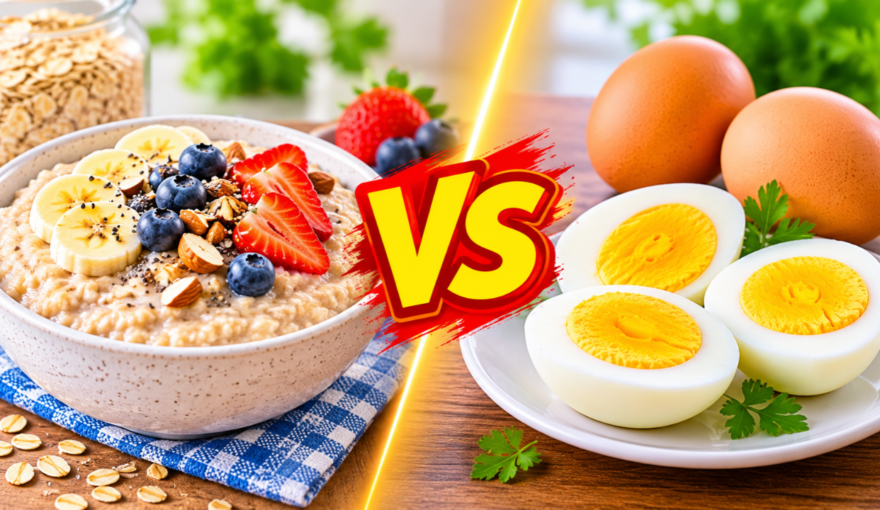
Oatmeal vs. Eggs: Which Is the Healthier Breakfast?
Ask a nutritionist about the best breakfast and two foods usually come up first: a warm bowl of oatmeal and a plate of eggs. Both are affordable, quick to make and much better for you than a pastry or sugary cereal.
They work in very different ways, though. Oatmeal is a high-fibre whole grain, and eggs are packed with protein. So which one deserves a place on your plate? It mostly depends on what you want breakfast to do for you.
Oatmeal and Eggs: Nutrition at a Glance

Here’s how a typical serving of each compares. Values are approximate.
| Nutrient | Oatmeal (½ cup dry rolled oats, cooked in water) | Eggs (2 large) |
|---|---|---|
| Calories | ~150 | ~140–155 |
| Protein | ~5 g | ~12–13 g |
| Fibre | ~4 g | 0 g |
| Carbohydrates | ~27 g | <1 g |
| Fat | ~3 g | ~10 g |
| Standout nutrients | Beta-glucan fibre, manganese, iron, magnesium | Choline, vitamin B12, vitamin D, selenium, lutein |
Calories are about the same, but the nutrients are very different. Oatmeal gives you mostly carbohydrates and fibre. Eggs give you mostly protein and fat.
Why Oatmeal Is Good for You
Oatmeal’s biggest strength is a soluble fibre called beta-glucan. It forms a gel-like texture in your gut that slows digestion, helps keep blood sugar steadier and helps lower LDL (“bad”) cholesterol. The evidence is strong enough that the US Food and Drug Administration lets oat products carry a heart-health claim, linking about 3 grams of oat beta-glucan a day, as part of a diet low in saturated fat, to a lower risk of heart disease.
Oats are also a whole grain, so they provide slow-release energy and minerals such as manganese, magnesium and iron. And the fibre supports healthy digestion and regularity.
The catch: what you put on top matters. Instant flavoured packets and large spoonfuls of brown sugar or syrup can turn a healthy bowl into a high-sugar breakfast. Plain rolled or steel-cut oats are the better choice.
Why Eggs Are Good for You
Eggs are one of the most nutrient-dense foods there is. Two eggs give you around 12 to 13 grams of high-quality protein, with all the essential amino acids your body needs.

They’re also one of the best sources of choline, which is important for brain health and especially during pregnancy. They contain vitamin B12, vitamin D (a nutrient few foods provide) and selenium, plus the antioxidants lutein and zeaxanthin, which support eye health.
Protein at breakfast helps you feel full for longer, so eggs can help reduce mid-morning snacking.
What About Cholesterol in Eggs?
Eggs used to be avoided because the yolks are high in dietary cholesterol. Research since then has shown that, for most healthy people, the cholesterol in food has less effect on blood cholesterol than once thought, and saturated and trans fats matter more. That’s why US dietary guidelines no longer set a strict daily limit on dietary cholesterol.
Most research suggests up to about one egg a day fits into a healthy diet for most people. If you have diabetes, heart disease or high LDL cholesterol, talk to your doctor about how many eggs suit you.

How you cook and serve eggs matters too. Boiled or poached eggs with vegetables are a very different meal from eggs fried in butter next to bacon and sausage.
Which Is Better for Your Goals?
For staying full and managing your weight: Eggs often come out slightly ahead because of their protein. Oatmeal’s fibre is filling too, so either can work.
For heart health and cholesterol: Oatmeal has the edge, thanks to the well-researched cholesterol-lowering effect of beta-glucan.
For building or keeping muscle: Eggs win on protein, especially if you exercise in the morning.
For steady energy and digestion: Oatmeal’s slow-release carbohydrates and fibre make it a strong choice.
For blood sugar control: Eggs barely affect blood sugar. Plain oats are a reasonable option for many people, especially paired with protein, but sweetened or instant oatmeal can cause spikes.
The Best Answer: Have Both
You don’t have to choose. Combining the two gives you a breakfast with fibre, slow-release energy and protein, which is the balance most dietitians recommend.
Try a bowl of oatmeal with a boiled egg on the side, or savoury oats topped with a soft-cooked egg, spinach and a little cheese. Swapping between the two through the week works well too.
Frequently Asked Questions
Is oatmeal or eggs better for weight loss?
Both can help. Eggs give more protein, which keeps you full, while oatmeal’s fibre also helps with fullness. Pairing them is often the most filling option.
Are eggs bad for your cholesterol?
For most healthy people, eating eggs in moderation has only a small effect on blood cholesterol. People with heart disease, diabetes or high LDL cholesterol should get personal advice from a doctor.
Is oatmeal good for lowering cholesterol?
Yes. Oats contain beta-glucan, a soluble fibre shown to help lower LDL cholesterol as part of a healthy diet.
Can I eat oatmeal and eggs together?
Yes. Together they make a balanced breakfast with fibre, complex carbohydrates and high-quality protein.
Source: Click here to view source