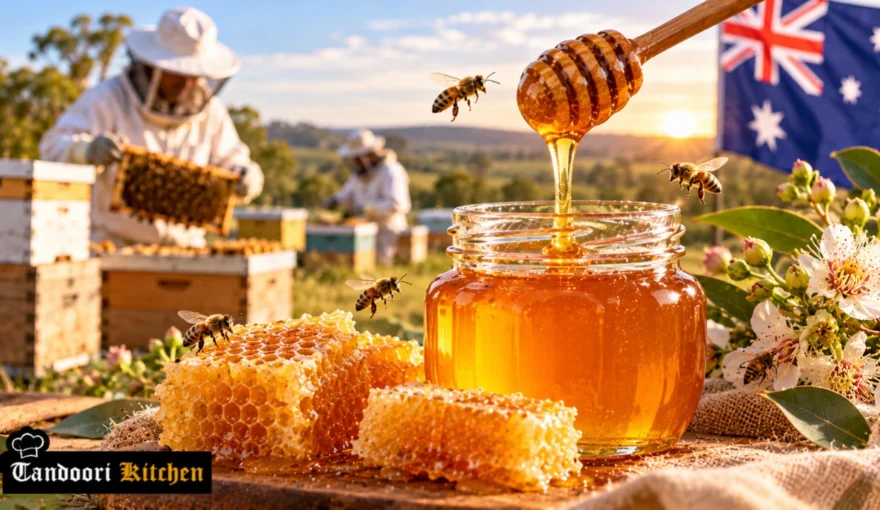
Imported Honey Stings: Sweet Victory for Aussie Beekeepers as Purity Concerns Spark Testing Push
Australian beekeepers are pushing for stronger honey-testing standards after an industry-funded investigation found signs of possible adulteration in some imported honey products sold in supermarkets.
The findings have renewed concerns about honey authenticity, product labelling and the challenges local producers face when competing with cheaper imports. The industry hopes the investigation will encourage improved testing methods and help shoppers make more informed choices.
Imported Honey Under the Microscope
According to an ABC News report published on December 10, 2025, Australian beekeepers funded laboratory testing of around 30 imported honey products. The early results indicated that some samples showed signs of adulteration, raising questions about whether existing testing procedures can identify every form of added substance.
Honey adulteration can involve blending honey with cheaper sweeteners, including rice syrup or cane sugar. Detecting these additions can be technically challenging, particularly when testing methods cannot reliably distinguish genuine honey from certain syrups.
The investigation was intended to build a clearer picture of the issue, rather than make a blanket claim about all imported honey.
Why Australian Beekeepers Are Concerned
Local honey producers say questionable products can undermine consumer confidence and make it harder for Australian businesses to compete on supermarket shelves.
Imported honey is often sold at lower prices than locally produced alternatives. If a product labelled as honey contains added sweeteners, producers who follow genuine honey-production practices may face an uneven competitive environment.

The industry is therefore calling for modern testing methods that can better identify potential adulteration and support fair competition.
Government Testing Standards in Focus
The Australian Honey Bee Industry Council has been working with the Department of Agriculture, Fisheries and Forestry (DAFF) to examine the effectiveness of current testing procedures.
The department told ABC News that it was conducting a pilot survey comparing existing border-testing methods with commercially available analytical tests. The results are intended to help determine whether further improvements to testing capabilities are needed.

DAFF also said that five per cent of consignments were randomly referred for testing under the Imported Food Inspection Scheme. Honey products tested between 2020 and 2024 had an average compliance rate of 97 per cent, according to the department.
These figures provide important context: the industry-funded investigation raises concerns about some samples, but it does not establish that all imported honey is adulterated.
How Shoppers Can Choose Honey With Confidence
Consumers who want to support Australian beekeepers can take a few practical steps when shopping for honey:
- Check the country-of-origin label: Look for products clearly labelled as 100 per cent Australian honey if buying local is your priority.
- Read the ingredient information: Check that the product is presented as honey rather than a blend containing other sweeteners.
- Buy from trusted local producers: Farmers’ markets, local beekeepers and established Australian honey businesses may offer more information about where their honey comes from.
- Compare labels carefully: Packaging and marketing terms can vary, so check the specific origin and product information rather than relying on the brand name alone.
Choosing Australian honey can help support domestic beekeepers, although country-of-origin labelling by itself is not a laboratory test of purity.
Why Honey Bees Matter Beyond the Honey Jar
Honey production is only one part of the value bees provide. Pollination supports many agricultural crops, making healthy bee populations important to Australia’s food supply.
The beekeeping industry has also faced other pressures, including varroa mites and drought-related reductions in honey production in some regions. Producers say maintaining trust in honey and ensuring fair competition are important to the long-term sustainability of the sector.
Stronger and more reliable testing could help regulators identify suspicious products while giving consumers greater confidence in what they buy.
A Sweet Outcome Still Depends on Better Testing
The investigation has put honey authenticity back in the spotlight and strengthened calls for testing methods that keep pace with increasingly sophisticated adulteration techniques.
For Australian beekeepers, the goal is straightforward: a fair marketplace, clear labelling and confidence that products sold as honey meet the expected standard. For shoppers, checking product origins and choosing trusted producers are practical ways to support the local industry while further testing work continues.
Original source: ABC News — Testing on supermarket imported honey finds some is not all honey