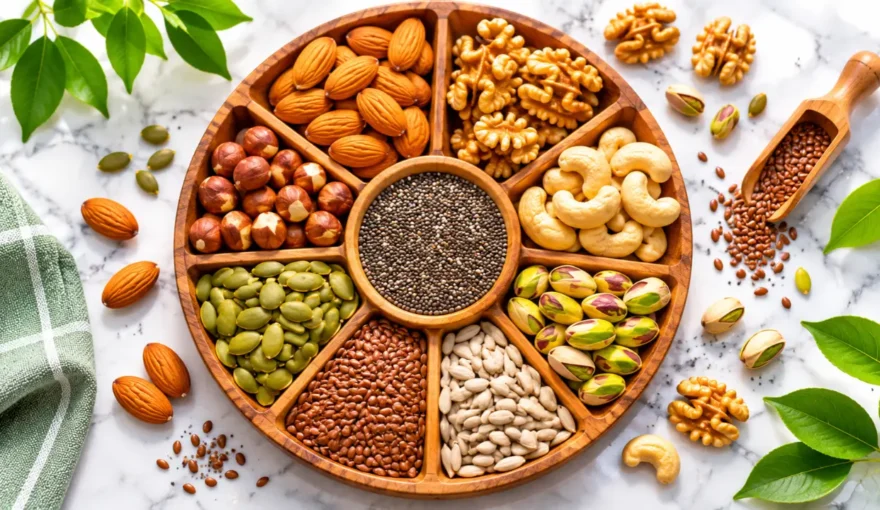
10 Healthiest Nuts and Seeds to Eat: Which Ones Offer the Most Benefits?
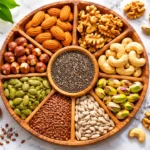
Nuts and seeds may be small, but they’re some of the most nutrient-packed foods you can eat. They’re rich in healthy fats, plant protein, fibre, vitamins and minerals, making them a convenient snack and an easy way to boost the nutrition of everyday meals. Eating nuts regularly has been linked to better heart health, and the U.S. Food and Drug Administration allows a qualified health claim that eating 1.5 ounces of most nuts a day as part of a balanced diet may reduce the risk of heart disease. But which nuts and seeds offer the most benefits? Here’s a closer look at 10 of the healthiest options and what makes each one special.
Almonds
Almonds are one of the most popular and versatile nuts. A 1-ounce serving (about 23 almonds) provides around 6 grams of protein and 3.5 grams of fibre. They’re also one of the best food sources of vitamin E, an antioxidant that helps protect cells from damage. Enjoy them as a snack, add them to oatmeal or use almond butter on toast.
Walnuts

Walnuts stand out for their high content of alpha-linolenic acid (ALA), a plant-based omega-3 fatty acid that supports heart health. They also contain antioxidants and polyphenols. Walnuts make a great addition to salads, baked goods and breakfast bowls.
Pistachios
Pistachios are among the lower-calorie nuts and offer around 6 grams of protein per ounce, which is about 49 kernels. They also contain fibre, potassium and antioxidants like lutein, which supports eye health. Choosing in-shell pistachios can also slow down your snacking, helping with portion control.
Cashews
Creamy and slightly sweet, cashews are a good source of magnesium, copper and iron. Magnesium plays a role in muscle and nerve function, blood sugar control and bone health. Cashews are also popular for making dairy-free sauces, creams and cheeses.
Brazil Nuts
Brazil nuts are one of the richest food sources of selenium, a mineral that supports thyroid function and the immune system. Just one or two nuts can provide more than a full day’s worth of selenium. Because selenium can be harmful in very high amounts, it’s best to stick to a small portion of one to two nuts a day rather than eating them by the handful.
Peanuts
Although technically a legume, peanuts are nutritionally similar to nuts and are among the most affordable options. They’re high in protein, with around 7 grams per ounce, and contain healthy fats, folate and niacin. For the healthiest choice, pick unsalted peanuts or natural peanut butter without added sugar.
Chia Seeds
Tiny but mighty, chia seeds are packed with fibre, offering nearly 10 grams per ounce. They’re also a great plant source of omega-3 ALA. When mixed with liquid, chia seeds form a gel, making them perfect for chia pudding, smoothies and overnight oats.
Flaxseeds

Flaxseeds are one of the richest plant sources of omega-3 ALA and contain lignans, plant compounds with antioxidant properties. They’re also high in fibre, which supports digestion. Choose ground flaxseed, as whole seeds can pass through the body undigested. Sprinkle it on cereal, yogurt or into baking.
Pumpkin Seeds
Pumpkin seeds, also called pepitas, are an excellent source of magnesium and zinc, along with plant protein of around 8 grams per ounce. Zinc supports the immune system, while magnesium helps with energy production and muscle function. Roast them for a crunchy snack or add them to salads and soups.

Hemp Seeds
Hemp seeds, also called hemp hearts, are one of the best plant-based sources of protein, with around 9 to 10 grams per ounce. They contain all nine essential amino acids and offer a healthy balance of omega-3 and omega-6 fatty acids. Their mild, nutty flavour works well in smoothies, salads and yogurt bowls.
Nutrition Comparison of Nuts and Seeds (Per 1-Ounce Serving)
| Nut or Seed | Calories | Protein | Fibre | Standout Nutrient |
|---|---|---|---|---|
| Almonds | About 164 | About 6 g | About 3.5 g | Vitamin E |
| Walnuts | About 185 | About 4 g | About 2 g | Omega-3 ALA |
| Pistachios | About 159 | About 6 g | About 3 g | Lutein |
| Cashews | About 157 | About 5 g | About 1 g | Magnesium, copper |
| Brazil nuts | About 187 | About 4 g | About 2 g | Selenium |
| Peanuts | About 161 | About 7 g | About 2.5 g | Folate, niacin |
| Chia seeds | About 138 | About 5 g | About 10 g | Fibre, omega-3 ALA |
| Ground flaxseed | About 150 | About 5 g | About 8 g | Omega-3 ALA, lignans |
| Pumpkin seeds | About 163 | About 8.5 g | About 2 g | Magnesium, zinc |
| Hemp seeds | About 166 | About 9.5 g | About 1 g | Complete protein |
Values are approximate and can vary by brand and preparation.
Which Nut or Seed Is the Healthiest?
There’s no single “healthiest” option, as each nut and seed offers different benefits. For protein, hemp seeds, pumpkin seeds and peanuts are top choices. For fibre, chia seeds and flaxseeds lead the way. For omega-3s, try walnuts, chia and flaxseed. And for specific minerals, Brazil nuts are best for selenium, while pumpkin seeds are great for magnesium and zinc. Eating a variety is the best way to enjoy all their benefits.
Tips for Eating Nuts and Seeds
- Watch your portions. Nuts and seeds are nutrient-dense but also high in calories. A small handful, about 1 ounce, is a typical serving.
- Choose unsalted and unsweetened. Avoid varieties coated in sugar, chocolate or lots of salt.
- Mix it up. Combine different nuts and seeds to get a wider range of nutrients.
- Store them properly. Keep nuts and seeds in an airtight container in a cool, dark place, or in the fridge, to stop their oils from going rancid.
- Be allergy aware. Nut and seed allergies can be serious, so always check labels and be mindful when serving others.
The Bottom Line
Nuts and seeds are an easy, delicious way to add healthy fats, protein, fibre and essential nutrients to your diet. From vitamin E-rich almonds and omega-3-packed walnuts to fibre-loaded chia seeds and protein-rich hemp hearts, each one brings something unique to the table. Enjoy a variety in sensible portions, and you’ll get the most benefits from these small but powerful foods.
FAQ
Which nut is the healthiest to eat every day?
Almonds, walnuts and pistachios are all excellent daily choices. Each offers healthy fats, protein, fibre and important nutrients. Eating a mix of different nuts is the best approach.
How many nuts should I eat a day?
A typical serving is about 1 ounce, or a small handful. Research linked to heart health often refers to around 1 to 1.5 ounces a day as part of a balanced diet.
Which seeds are highest in protein?
Hemp seeds and pumpkin seeds are among the highest in protein, with around 8 to 10 grams per ounce.
How many Brazil nuts can I eat in a day?
Because Brazil nuts are very high in selenium, it’s best to stick to one or two a day to avoid getting too much.
Bolded anchor phrases to link: healthy fats, almonds, walnuts, pistachios, cashews, Brazil nuts, selenium, peanuts, chia seeds, flaxseeds, pumpkin seeds, hemp seeds, protein, fibre, omega-3s.
Source: Click here to view source