Christmas Food in Australia: What Goes on the Table and When to Buy It
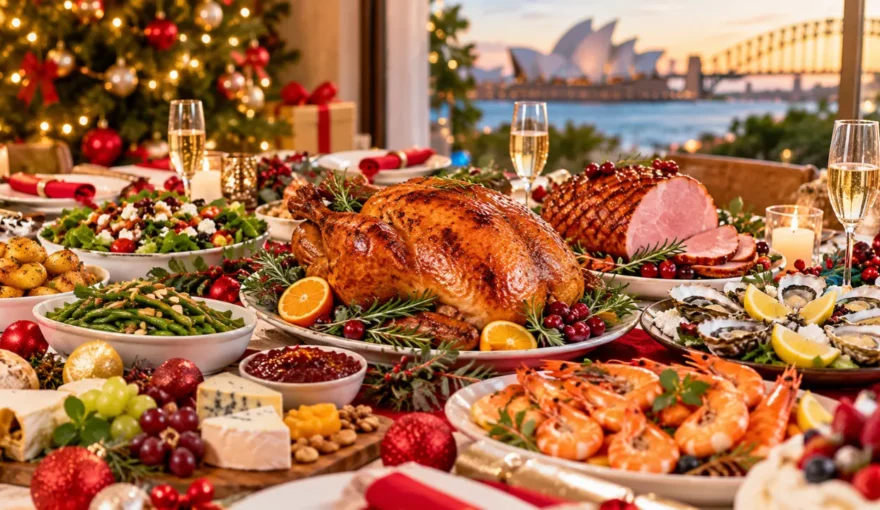
Christmas food in Australia looks nothing like the snowy feasts on old greeting cards. Instead, the day falls in the middle of summer, so families build their lunch around cold, fresh and easy dishes. Think glazed ham, chilled prawns, bright salads and a pavlova piled high with fruit. In other words, it is a feast made for the backyard rather than the formal dining room.
Even so, a great spread still takes some planning. This guide walks through each part of the table and explains how much food a group of ten really needs. It also sets out a simple shopping timeline. As a result, you can spend Christmas Eve relaxing instead of queuing at the shops.
Why Christmas Food in Australia Is Served Cold
When 25 December arrives, much of the country is sweltering. Cities such as Perth, Adelaide and Brisbane often pass 30°C by lunchtime. Naturally, few hosts want an oven running for hours in that kind of heat.

Over time, the menu changed to suit the weather. The roast turkey of British tradition still turns up, particularly in the cooler southern states and in homes with strong English roots. However, most households now lean towards food that can be prepared ahead, served cool and left out for grazing.
This shift matters for planning too. A cold lunch is mostly about assembling good ingredients rather than cooking them from scratch. Therefore, a large share of the shopping can be done weeks in advance.

A Christmas Table Shaped by Many Cultures
Modern Australia is one of the most multicultural nations on earth, and its Christmas table reflects that. Alongside the ham, you might find Greek spanakopita, Lebanese tabbouleh or an Italian antipasto platter. Meanwhile, Vietnamese rice paper rolls, Indian samosas and West African jollof rice are becoming familiar sights at family gatherings.
For many migrant families, Christmas lunch is a blend of two worlds. Grandparents bring the dishes they grew up with. Younger relatives, on the other hand, add the seafood and pavlova of their Australian childhood. The result is a meal that feels personal rather than prescribed.

The Classic Dishes on an Australian Christmas Table
Glazed Leg Ham
If Australia has a signature Christmas dish, this is it. Most families buy a cooked ham on the bone from a local butcher and finish it at home. First, peel back the skin and score the fat in a diamond pattern. Next, press in a few cloves if your family enjoys them, then brush on a sticky glaze. Honey and mustard, maple and orange, or brown sugar with pineapple juice are all popular choices. Finally, bake it in a hot oven until the surface turns glossy and caramelised.
Serve it warm on the day, then enjoy it cold for the rest of the week. Wholegrain mustard, cranberry sauce and a fruity relish make ideal partners.
Prawns and Fresh Seafood
Few things say summer quite like a platter of chilled prawns. Many tables also feature oysters, smoked salmon, crab or Moreton Bay bugs. Because seafood spoils quickly, it is the one item that must be bought at the last minute. Ideally, visit a fishmonger on 23 or 24 December and keep everything on ice until serving.
The extras, by contrast, can be sorted much earlier. Lemons, cocktail sauce, aioli and plenty of ice are all worth ticking off the list beforehand.
The Grazing Board
Before lunch begins, guests usually gather around a generous board of cheese, crackers and cured meats. It keeps everyone happy while the host finishes up in the kitchen. Since most of these items keep well, the board is also the easiest course to prepare ahead.
To build a good one, choose three cheeses instead of six: one hard, one soft and one blue. Add two styles of cracker, a bowl of olives, some salted nuts and a fruit paste or chutney. That said, resist the urge to overcrowd it. A tidy board looks more inviting and is far easier to eat from.

Summer Salads
For a group of ten, three salads is plenty. Aim for variety: something green and crisp, something hearty, and something with fresh fruit through it. Mangoes, cherries and stone fruit are at their best in late December. That is exactly why they appear in so many festive salads.
As a practical tip, make the hearty salad, such as potato or pasta, the day before. Leafy salads, however, should only be dressed just before they reach the table.
Christmas Desserts
Pavlova is the undisputed star of the dessert course. Its crisp meringue shell, soft centre and topping of cream and berries suit a hot afternoon perfectly. Trifle comes a close second, while traditional households still serve plum pudding with custard. In addition, a bowl of fresh cherries sits on almost every Australian table.
Alternatively, you can skip the baking altogether with a dessert platter. Shortbread, chocolate truffles, gingerbread and seasonal fruit look festive and need no oven time at all.
The Finishing Touches
Bon bons, a gingerbread house for the kids and small edible gifts for guests complete the day. Because all of these are shelf stable, there is no reason to leave them until December. Indeed, the prettiest designs tend to sell out first.
When to Buy Christmas Food in Australia
The secret to a calm Christmas is splitting the shopping into two groups. Shelf stable goods can be bought from late September onwards. Fresh produce, on the other hand, belongs to the final week.
| What to buy | Best time to buy | Why it works |
|---|---|---|
| Biscuits, shortbread, chocolate and nuts | Late September to October | Long shelf life, and seasonal ranges are rarely restocked |
| Crackers, chutneys, mustards and sauces | October to mid-November | Sealed jars and packets keep for months |
| Bon bons and gingerbread house kits | October to November | Popular designs disappear early |
| Food gifts that need posting | Early to mid-November | Postal cut-off dates arrive sooner than most people expect |
| Ham | Order in November, collect in Christmas week | Butchers fill their order books and whole legs run out |
| Cheese | Up to a week ahead | Most varieties benefit from a few days’ rest in the fridge |
| Prawns and seafood | 23 or 24 December | Freshness matters more than anything else |
| Cherries, mangoes, salad leaves and dairy | Christmas week | Peak season, but a very short shelf life |
Keep postal deadlines in mind as well. Australia Post usually announces its Christmas cut-off dates in October, and interstate parcels close well before local ones. So, if you are sending food gifts to family in another state, post them early rather than at the last minute.
A quick word on ham storage, too. Wrap the leg in a ham bag or clean cotton pillowcase soaked in water with a splash of vinegar. Then rinse and re-soak the cloth every couple of days. Stored this way in the fridge, a glazed ham stays moist for well over a week.
How Much Christmas Food Do You Need for 10 People?
Over-catering is practically an Aussie Christmas tradition in itself. Still, a few rough guides help keep waste down while making sure nobody leaves hungry.
- Ham: Allow about 200g to 250g per person on the bone. A half leg of roughly 5kg feeds ten, with leftovers for sandwiches.
- Prawns: Plan on 250g per person as part of a spread. Increase that to around 400g if seafood is the main event.
- Cheese: Roughly 40g to 50g per person is enough before a big lunch.
- Crackers: One 100g packet covers three or four guests. Even so, always buy one extra.
- Salads: Three different salads give enough choice without overwhelming the table.
- Desserts: Two options are ideal, such as a pavlova and a platter of fresh fruit.
What to Order Online and What to Buy Locally
Dividing your list this way makes the whole process far simpler. Anything shelf stable can arrive by courier weeks ahead and wait patiently in the pantry. That includes crackers, condiments, biscuits, chocolate, nuts, bon bons, gingerbread kits and gift hampers.
Perishables, meanwhile, are a job for local shops in the final days. Seafood, ham, dairy, bread and fresh fruit all taste better when they travel a short distance. Local butchers and fishmongers can also offer advice on cuts, quantities and storage.
Remember to plan for the leftovers while you shop. Cold ham on fresh bread with a spoonful of chutney is Boxing Day lunch in homes across the country. For that reason, buy your relishes in jars that will last the whole week. Anything left unopened simply goes back into the cupboard for next time.
An Australian Christmas lunch is relaxed, generous and built for warm weather. Get the shelf stable items sorted in October and November, and order your ham early. After that, leave only the seafood, fruit and salad leaves for the final days. That way, you will spend Christmas Day at the table with your loved ones rather than stuck in the kitchen.