Wendy’s Takeover Bid: Why Nelson Peltz Wants to Take the Burger Chain Private…
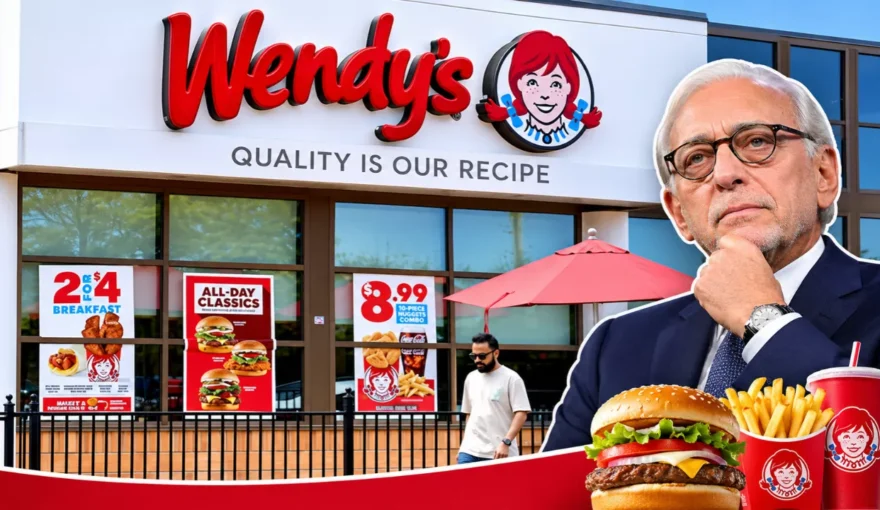
The Wendy’s takeover story has moved from rumor to reality. Nelson Peltz’s Trian Fund Management has offered $1.4 billion to take the struggling burger chain private. That price is strikingly small, too. In fact, it amounts to less than 1% of McDonald’s market value. For a brand once known as the “quality” choice in fast food, the offer shows just how far Wendy’s has slipped in America’s burger wars.
How Wendy’s Lost Its Place in the Burger Wars
For decades, Wendy’s held a clear identity. Dave Thomas opened the first restaurant in 1969 and named it after his daughter. Soon, square patties, chili, the Frosty and “fresh, never frozen” beef set it apart from McDonald’s. However, that edge has faded over the past 18 months.

Today, Wendy’s has dropped to third place among U.S. burger chains. Burger King, which it long trailed behind only McDonald’s, has now overtaken it. Meanwhile, the stock sits roughly 65% below its level three years ago, and it briefly touched a 20-year low in June.
The Numbers Behind the Slump
The decline is not just a feeling among customers. Instead, it shows up clearly in the financial results:
- Six straight quarters of falling U.S. same-store sales
- 7% drop in established-restaurant U.S. sales last quarter
- 12.5% fall in U.S. customer visits, a sign that regulars are drifting away
- 40% decline in net income in the first half of 2026, partly due to high beef costs
- $2.4 billion in debt, roughly equal to its yearly revenue
Because of this, the company withdrew its full-year 2026 outlook in August. It also cut its dividend sharply and warned that weak traffic would last through the year.
What Went Wrong Inside the Company
Bob Wright, who became CEO in May, has been unusually candid about the causes. According to him, Wendy’s cut ingredient quality to save money. Staffing gaps also made service uneven from one restaurant to the next. On top of that, the chain lacked strong value deals for budget-conscious diners. Recent launches, including a new chicken sandwich and themed kids’ meals, failed to excite customers. Breakfast, a long-standing weak spot, added cost and complexity for franchisees without paying off.
Leadership churn made things harder still. Wright is the fourth CEO in three years. Before Wendy’s, he turned around Potbelly, and he previously served as Wendy’s operations chief from 2013 to 2019.
How Wendy’s Compares With Its Rivals
While Wendy’s struggled, competitors moved quickly to win over its customers. The table below shows the contrast.
| Chain | Recent Same-Store Sales Trend | Key Driver |
|---|---|---|
| Wendy’s | Down 7% (sixth straight decline) | Weak value, uneven service, failed launches |
| Burger King | Up 8.5% | “Reclaim the Flame” remodels and Whopper revamp |
| McDonald’s | Modest growth | Scale and value meal deals |
| Shake Shack | Up 3.5% | Steady premium-casual demand |

Burger King’s gains stand out most. After remodeling about half its restaurants and reworking the Whopper, sales of its signature burger rose 20%.
Why Trian Wants to Take Wendy’s Private
Trian already owns about 16% of Wendy’s and has held shares since 2005. Peltz’s son Brad and former Trian partner Peter May also sit on the board. Moreover, this is not Trian’s first attempt; it explored a take-private deal in 2022 and again in February.
In a letter to the board, Peltz argued that Wendy’s needs major investment to reduce debt and fund its turnaround. Away from quarterly scrutiny, the company could fix problems without constant market pressure. Some analysts agree, since a recovery may take years given weak lower-income spending and a soft burger category.
Still, not every shareholder is convinced. Blackwells Capital called the timing opportunistic, saying Peltz waited for the stock to fall. It also blamed his long influence over Wendy’s for many of its current troubles. In response, the board formed a special committee to review the offer.
What Happens Next for Wendy’s
Attention now turns to Wendy’s third-quarter results, due this Thursday. Analysts expect another U.S. same-store sales drop of around 6%. As a result, the numbers will be closely watched for any sign of recovery.
Wright’s track record offers some hope. At Potbelly, he improved the menu and added budget-friendly deals while fending off activist investors. That company was later taken private by RaceTrac. Similarly, he appears to be taking a slow and methodical approach at Wendy’s. “It’s going to take time,” he told analysts in August. Even so, a takeover fight could distract leadership at a critical moment.
Frequently Asked Questions
1. How much is Trian offering for Wendy’s?
Trian Fund Management has offered $1.4 billion to take Wendy’s private.
2. Why is Wendy’s struggling?
Weaker ingredient quality, uneven service, poor value options, failed menu launches, high beef costs and frequent CEO changes have all hurt sales.
3. Who is Wendy’s current CEO?
Bob Wright, the former Potbelly CEO and an ex-Wendy’s operations chief, took over in May 2026.
4. Has Wendy’s accepted the takeover offer?
No. The board has formed a special committee to review Trian’s proposal, and no decision has been announced yet.