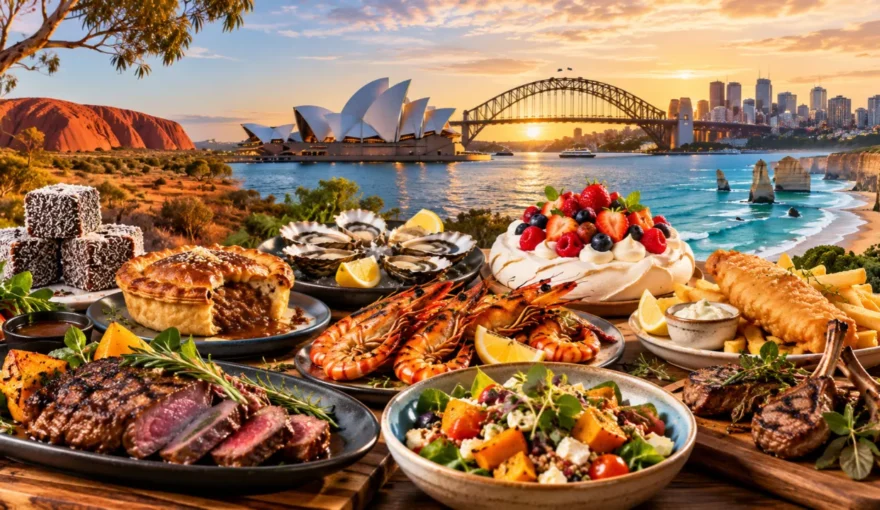
Eating Australia Food Guide: What to Eat and Drink in Every State and Territory!
Australia is a huge country, and it eats like one. In the far north, a tropical market sizzles under the evening sky. Meanwhile, at the southern tip, a cool-climate winemaker pours sparkling wine beside frosty vineyards. Each state has its own flavours, produce and food rituals.
For travellers, this variety is a gift. However, it also means you need a plan. This guide walks you through the signature dishes, drinks and food experiences in every Australian state and territory, so you know exactly where to point your fork.
Why Australian Food Changes So Much From State to State
Climate shapes everything on the Australian plate. For example, Queensland and the Northern Territory grow mangoes, bananas and other tropical fruit. In contrast, Tasmania and Victoria produce cool-climate wine, cheese and stone fruit.

Migration matters just as much. Greek, Italian, Lebanese, Vietnamese and Chinese communities have shaped city food for generations. As a result, a Melbourne laneway or a Sydney suburb can feel like several countries on one street.
Above all, First Nations food knowledge runs through the whole country. Native ingredients such as finger lime, wattleseed, lemon myrtle and Davidson plum now appear on menus everywhere. Therefore, eating native flavours is one of the best ways to understand the land you are travelling through.

Quick Guide: Signature Foods and Drinks by State
| State or Territory | Must-Try Food | Signature Drink | Top Food Region or Experience | Best Season to Visit |
|---|---|---|---|---|
| New South Wales | Sydney rock oysters | Hunter Valley semillon | Sydney Fish Market, Hunter Valley | Spring and autumn |
| Victoria | Dim sims, café brunch | Yarra Valley pinot noir | Melbourne laneways, Queen Victoria Market | Autumn |
| Queensland | Moreton Bay bugs, mangoes | Bundaberg rum | Brisbane, Sunshine Coast hinterland | Winter (dry season) |
| South Australia | Pie floater, Coffin Bay oysters | Barossa Valley shiraz | Adelaide Central Market, Barossa | Autumn (vintage) |
| Western Australia | Western rock lobster, prawns | Margaret River cabernet | Margaret River, Fremantle | Spring and summer |
| Tasmania | Salmon, cheese, oysters | Sparkling wine, whisky | Hobart, Bruny Island | Summer |
| Northern Territory | Barramundi, laksa | Iced coffee or local beer | Mindil Beach Sunset Market | Dry season (May–October) |
| Australian Capital Territory | Black truffles | Shiraz viognier | Canberra wine district | Winter (truffle season) |
New South Wales: Oysters, Harbour Views and Hunter Wine
Sydney is the natural starting point for many visitors. First, head to the Sydney Fish Market early in the morning. Here, you can watch the day’s catch arrive and eat fresh seafood right on the wharf.
Next, try Sydney rock oysters. They are smaller and creamier than many imported varieties. Moreover, they grow in estuaries along the state’s coastline, so freshness is rarely a problem.

Beyond the city, the Hunter Valley sits about two hours north. It is one of Australia’s oldest wine regions. In particular, look out for Hunter semillon, a crisp white that ages beautifully over many years.
Don’t miss: a weekend cellar-door crawl in the Hunter, followed by a long lunch among the vines.
Victoria: Coffee Culture and Cool-Climate Wine
Melbourne takes food seriously. In fact, many locals will tell you the city invented modern Australian brunch. Smashed avocado, flat whites and inventive egg dishes appear on almost every café menu.
The Queen Victoria Market is another highlight. It has been trading for well over a century. Additionally, its night market brings street food stalls, music and crowds during the warmer months.
For a uniquely local snack, try a dim sim. This chunky, steamed or fried dumpling is a Melbourne creation. Similarly, the potato cake (a battered, deep-fried potato slice) is a classic fish-and-chip shop side.
Outside the city, the Yarra Valley and Mornington Peninsula are easy day trips. Both regions are known for elegant pinot noir and chardonnay. Consequently, they attract wine lovers from all over the world.
Queensland: Tropical Fruit and Sunshine Seafood
Queensland’s warm climate makes it Australia’s fruit bowl. For instance, mangoes, pineapples, bananas and macadamias all grow here. In summer, a ripe Bowen mango eaten over the sink is a true local ritual.
Seafood is equally important. Moreton Bay bugs, a type of flat slipper lobster, are sweet and tender. Likewise, mud crabs and prawns feature heavily in coastal towns.
To drink, the obvious choice is Bundaberg rum. The distillery offers tours, and the brand is part of Queensland identity. Meanwhile, Brisbane’s food scene keeps growing, with rooftop bars and riverside dining along the Brisbane River.
Local tip: Visit the Sunshine Coast hinterland for farm gates, ginger products and macadamia orchards.
South Australia: The Wine State With a Food Market Heart
South Australia produces a large share of the country’s wine. Above all, the Barossa Valley is famous for rich, bold shiraz. Some vineyards there hold vines more than a century old.
Nearby, the Clare Valley is known for dry riesling. In addition, McLaren Vale, just south of Adelaide, combines wine with beaches and olive groves.
Adelaide Central Market is a must for food lovers. It is one of the largest undercover produce markets in the Southern Hemisphere. Furthermore, you can sample cheese, smallgoods and baked treats in one compact space.
For something quirky, order a pie floater. This is a meat pie sitting in a bowl of thick pea soup. It sounds odd, yet many locals swear by it after a late night.
Finally, head west to Coffin Bay on the Eyre Peninsula. Its oysters are among the most prized in the country. Kangaroo Island, meanwhile, offers honey, gin and farm-to-table dining.
Western Australia: Lobster, Prawns and Margaret River
Western Australia has a long coastline and remarkably clean waters. As a result, its seafood is outstanding. Western rock lobster is the state’s star catch, while prawns from Shark Bay and Exmouth are sweet and firm.

Margaret River, about three hours south of Perth, is the state’s best-known wine region. It is especially admired for cabernet sauvignon and chardonnay. Besides wine, the area offers craft breweries, chocolate makers and cheese producers.
Closer to Perth, Fremantle has a relaxed port-town atmosphere. Here, fish and chips by the harbour is almost compulsory. Up north, Broome adds another layer with pearl meat, a rare delicacy linked to its pearling history.
Tasmania: Clean, Cool and Full of Flavour
Tasmania may be small, yet its food reputation is huge. Thanks to its cool climate and fertile soil, the island produces superb salmon, oysters, cheese, apples and berries.
Hobart is the best base. On Saturdays, Salamanca Market fills with growers, bakers and craft stalls. Moreover, the city’s waterfront offers fresh fish straight off the boats.
Take a short ferry to Bruny Island for oysters, cheese and berries. Similarly, the Tamar Valley in the north is a leading region for sparkling wine and pinot noir.
Tasmania also produces award-winning whisky. In recent years, small distilleries have spread across the island. Therefore, a distillery tour is a great addition to any itinerary.
Northern Territory: Tropical Markets and Bush Tucker
The Northern Territory is wild, warm and vast. Its food reflects that spirit. Barramundi is the signature fish, and catching your own is a popular pastime for visitors.
In Darwin, the Mindil Beach Sunset Market runs during the dry season. Here, you can eat laksa, satay and fresh fruit smoothies while the sun sets over the Timor Sea. In fact, Darwin’s laksa culture reflects its close links with Southeast Asia.
Adventurous eaters can also try crocodile or kangaroo. Meanwhile, Indigenous-led tours introduce bush tucker such as native fruits, seeds and plants. These experiences offer a deeper understanding of Country and culture.
Australian Capital Territory: Truffles and a Quiet Wine Scene
Canberra often gets overlooked by food travellers. However, it has plenty to offer. The surrounding region is one of Australia’s leading producers of black winter truffles.
Truffle season runs through the colder months. During this time, local farms run truffle hunts with trained dogs. Afterwards, many restaurants serve truffle-led tasting menus.
The Canberra District wine region is equally impressive. It is especially known for shiraz viognier and riesling. In addition, the Capital Region Farmers Market brings growers from across the area every weekend.
Native Australian Ingredients Worth Seeking Out
No food trip around Australia is complete without native flavours. Below are some of the most common ones you will find on menus.
| Native Ingredient | Flavour Profile | Common Uses |
|---|---|---|
| Finger lime | Tangy, citrus “caviar” pearls | Oysters, cocktails, seafood |
| Wattleseed | Nutty, coffee-like | Bread, desserts, ice cream |
| Lemon myrtle | Bright, lemony herb | Tea, fish, baking |
| Davidson plum | Sour, deep red fruit | Jams, sauces, sorbet |
| Kakadu plum | Tart, very high in vitamin C | Juices, skincare, desserts |
| Saltbush | Salty, earthy leaf | Lamb dishes, salads, crisps |
| Macadamia | Buttery, rich nut | Snacks, baking, oil |
How to Plan a Food Trip Around Australia
First, choose your season carefully. For example, the north is best in the dry season, while Tasmania shines in summer. Similarly, South Australia’s wine regions come alive during the autumn vintage.
Second, don’t try to cover everything at once. Australia’s distances are vast, so flying between states saves a lot of time. Instead, pick two or three regions and explore them properly.
Third, book cellar doors and popular restaurants in advance, especially on weekends. In addition, many wine regions offer guided tours, which means nobody has to worry about driving.
Finally, stay curious. Some of the best meals happen at roadside farm stands, small-town bakeries and local markets. In other words, the less polished spots often deliver the most memorable flavours.
Australian food is not one cuisine. Rather, it is a collection of regional stories shaped by climate, migration and thousands of years of Indigenous knowledge. From Sydney oysters to Darwin laksa, every state gives you something different to taste.
So, whether you are chasing world-class wine, fresh seafood or native flavours, Australia rewards hungry travellers. Pack an appetite, plan a few key stops and let each state surprise you.
Frequently Asked Questions
1. Which Australian state is best for food lovers?
It depends on your taste. South Australia is ideal for wine and markets, while Tasmania is perfect for fresh produce and seafood. Victoria, meanwhile, leads on café culture and city dining.
2. What is the most famous food in Australia?
Meat pies, Vegemite on toast, lamingtons and pavlova are national classics. However, fresh seafood and native ingredients are increasingly what define modern Australian cooking.
3. When is the best time to take a food and wine trip in Australia?
Autumn (March to May) is a great all-rounder, especially for wine regions during harvest. For the tropical north, visit in the dry season between May and October.
4. Can visitors try Indigenous Australian food?
Yes. Many restaurants use native ingredients, and Indigenous-led tours offer bush tucker experiences, particularly in the Northern Territory and Queensland. These tours also share cultural knowledge alongside the food.