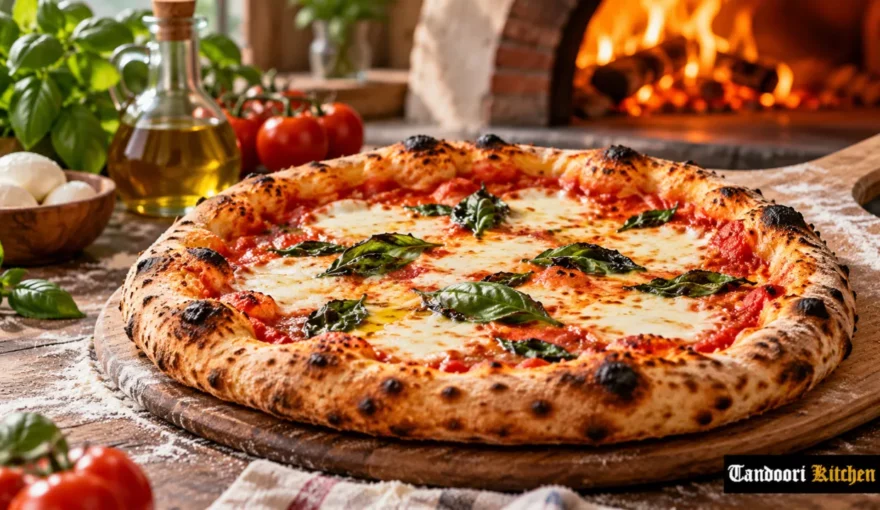
How to Make Real Italian Pizza at Home (Step-by-Step Recipe)
If you have ever wondered how to make real Italian pizza at home, the good news is that the ingredient list is short and the technique is mostly patience. A true Neapolitan pizza has a thin, soft centre, a puffy, lightly charred edge and only a few toppings. Pizzerias in Naples use wood-fired ovens that reach roughly 450-485°C, which a home oven can’t match. A hot baking surface, a well-fermented dough and restraint with toppings will still get you remarkably close.
What Makes Italian Pizza “Real”?
Authentic Italian pizza is defined by simplicity and quality, not by quantity. Traditional Neapolitan dough uses only flour, water, salt and yeast. The sauce is crushed tomato with a little salt, and the cheese is fresh mozzarella. The craft of the Neapolitan pizza maker (pizzaiuolo) was added to UNESCO’s list of intangible cultural heritage in 2017, a recognition of how much skill goes into something so simple.
The biggest difference from most takeaway pizza is texture. Real Italian pizza is not crispy like a cracker or thick like a pan pizza. It should be soft and slightly chewy, and it should bend when you lift a slice.

Ingredients You Need (Makes 4 Pizzas)
Use a kitchen scale. Weighing flour and water is far more reliable than using cups.
| Ingredient | Amount | Why it matters |
|---|---|---|
| “00” flour (or strong bread flour) | 500 g | Finely milled, gives a soft, stretchy dough |
| Water, lukewarm | 325 ml (about 65% hydration) | Enough moisture for an airy crumb that is still easy to handle |
| Fine sea salt | 10 g | Adds flavour and strengthens the gluten |
| Instant dry yeast | ¼ to ½ tsp | A small amount plus a long rise builds better flavour |
| Canned whole peeled tomatoes (San Marzano-style) | 400 g can | Naturally sweet, so no cooking or sugar needed |
| Fresh mozzarella (fior di latte) | 200-250 g | Melts well and is less watery than buffalo mozzarella on a home oven |
| Fresh basil, olive oil | To finish | Classic aroma and richness |
Step-by-Step Method
1. Make the dough. Dissolve the salt in the water, stir in the yeast, then add the flour and mix until no dry flour remains. Knead for 8-10 minutes until smooth and elastic. Cover and rest at room temperature for 1-2 hours.

2. Ferment slowly. Divide into four balls of about 210 g each, place them in a lightly oiled container and refrigerate for 24-48 hours. This slow cold ferment is the single biggest upgrade you can make. It develops flavour and a lighter, more digestible crust. Take the dough out 2 hours before baking.
3. Prepare the toppings. Crush the tomatoes by hand and add a pinch of salt. Do not cook the sauce, because it cooks on the pizza. Tear the mozzarella and let it drain on paper towels for 30 minutes so the pizza doesn’t turn soggy.


4. Shape by hand. Press from the centre outward, leaving the edge untouched so it puffs up. Avoid a rolling pin, which pushes out the air bubbles that give the crust its texture.
5. Bake very hot. Place a pizza stone or steel on the top-third rack and preheat your oven at its highest setting (usually 250-290°C) for at least 45 minutes. Bake for 5-8 minutes, switching to the grill for the last minute if the top needs more colour. Add basil and olive oil after baking.
Common Mistakes to Avoid
- Overloading the pizza. Too much sauce or cheese makes the centre wet and heavy.
- Skipping the preheat. A cold stone or tray gives a pale, doughy base.
- Using cold dough straight from the fridge, which is hard to stretch and bakes unevenly.
- Adding sugar or cooking the sauce. Good tomatoes don’t need either.
- Cooking too long at a low temperature, which dries the crust instead of blistering it.
Tips for the Best Results at Home
A pizza steel conducts heat faster than a stone and tends to give better browning in a home oven. If you have no steel or stone, flip a heavy baking tray upside down and preheat it the same way. Keep toppings simple while you are learning, such as classic Margherita (tomato, mozzarella, basil), and add extras only once the dough feels right. Notes on hydration, fermentation time and oven temperature help you repeat what works.
Frequently Asked Questions
What flour is best for real Italian pizza?
“00” flour is the traditional choice because it is finely milled and produces a soft, elastic dough. If you can’t find it, strong bread flour is a good substitute.
Can I make authentic Italian pizza without a pizza oven?
You can make a very good Neapolitan-style pizza in a regular oven. Use a preheated stone or steel and the highest temperature available. It won’t be identical to a wood-fired pizza, but the dough and flavour can be excellent.
How long should pizza dough rest?
At minimum, 8-24 hours at room temperature or 24-48 hours in the fridge. Longer fermentation improves flavour and texture.
Why is my pizza soggy in the middle?
The usual causes are too much sauce, wet mozzarella, an oven that is not hot enough, or an under-preheated baking surface. Drain the cheese, use less sauce and preheat longer.