Cottage Cheese in Donuts? This 4-Ingredient Pumpkin Version Skips the Eggs, Butter and Oil…
Cottage cheese isn’t the first thing most people think of when they imagine a fall donut. It usually turns up beside fruit or on toast, and it rarely makes it near a baking tray. Yet a recipe published on October 21, 2026 by Jennifer Lee of Kirbie’s Cravings puts it at the centre of a pumpkin donut with just four ingredients, no eggs, no butter and no oil. Here’s what’s in it, why it works and what to know before you bake a batch.
The Four Ingredients
The base recipe asks for just four things:
- Cottage cheese: 2/3 cup (175 g) of 4% high-protein cottage cheese
- Pumpkin puree: 1/3 cup (86 g) of canned pumpkin
- Maple syrup: 3 tablespoons (45 ml)
- Self-rising flour: 1⅓ cups (185 g)
The author also suggests an optional half teaspoon of pumpkin pie spice. It isn’t counted among the four, but it’s the easiest way to make the donuts taste more like fall.

How the Batter Comes Together
The method is as simple as the ingredient list. Blend the cottage cheese, pumpkin and maple syrup until completely smooth, which is the step that turns lumpy curds into a creamy base. Then fold in the flour just until no dry streaks remain. The batter should look light and airy, and overmixing is the thing to avoid.
From there, scoop the dough with a 1-tablespoon cookie scoop, roll each portion into a ball with slightly damp hands and space them about an inch apart. This makes small, round donut-hole-style bites, not ring-shaped donuts, and the recipe yields about 26 of them.

Oven or Air Fryer?
You can bake or air fry them, and the two methods give slightly different results.
| Method | Temperature | Time | What to expect |
|---|---|---|---|
| Oven | 375°F (190°C) | 16 to 18 minutes | Donuts spread out a little more |
| Air fryer | 325°F (160°C) | 8 to 10 minutes, in batches | Rounder shape and a crispier outside |
The author notes that the donuts brown and crisp without any oil. A light spray of oil on top is optional, and it simply helps the crust stay crisp for longer.

Why These Ingredients Work Together
You can see why this combination holds together. Cottage cheese contributes moisture and protein, while pumpkin puree helps keep the crumb tender. Self-rising flour already contains leavening and salt, which saves you from measuring baking powder. And maple syrup adds light sweetness without needing a sugar bowl. Together, they fill the roles that eggs, butter and oil usually play in a donut, which is why the list can stay so short. That’s my reading of the recipe, and it’s why small details in the ingredients matter more than usual.
Three Details That Make or Break the Batch
The recipe’s notes flag a few specifics that are easy to overlook:
- Use 4% cottage cheese. Low-fat versions make the dough too wet. The author also recommends a high-protein brand with roughly 13 to 14 grams of protein per half cup.
- Pick a thick pumpkin puree. Watery brands can throw off the texture.
- Choose the right self-rising flour. The recipe was tested with a brand containing a regular amount of protein, about 3 grams per quarter cup. Flours with lower or higher protein absorb liquid differently. To make your own, whisk 2 cups of all-purpose flour with 1 tablespoon of baking powder and ½ teaspoon of salt, then measure out 1⅓ cups. The author warns that higher-protein flours, such as some King Arthur and Bob’s Red Mill options, won’t work well for this recipe.
A Reality Check on the “Healthy” Claims
It’s worth reading the label claims carefully. “No refined sugar” here means the donuts are sweetened with maple syrup, which is still added sugar, just less processed than white sugar. The flour is also refined white flour. The author’s estimate is about 34 calories, 6 grams of carbohydrate, 2 grams of sugar and 1 gram of protein per piece, which makes them a light treat but not a high-protein snack. Those figures are estimates from an online calculator, and they exclude any coating.

So think of them as a lighter, simpler take on a donut, not a health food. If you have an allergy or follow a special diet, note that they contain dairy and wheat.
Serving, Coating and Storing
These donuts are best eaten warm. Because they aren’t fried, they firm up and become denser as they cool, so it’s better to bake them close to when you plan to eat. They’re lightly sweet on their own, and the author suggests adding one to two tablespoons more maple syrup if you plan to skip the coating.
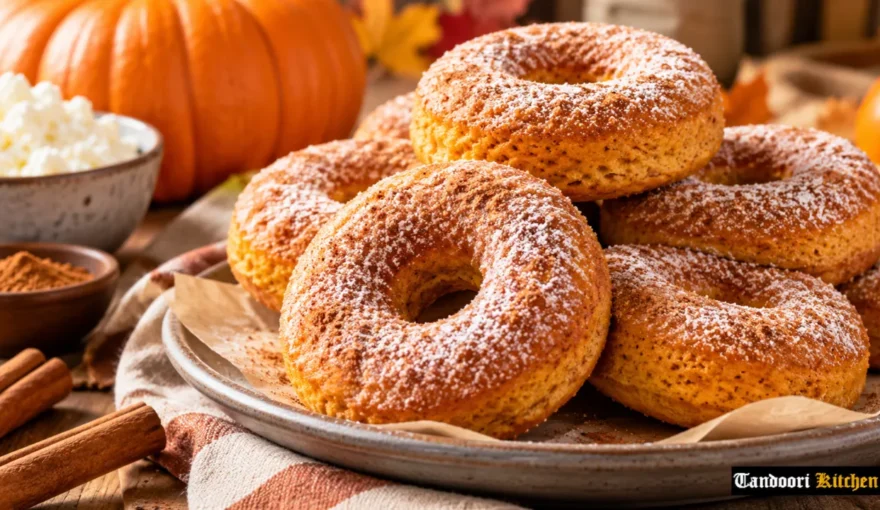
If you want a finish, you can glaze them or roll them in cinnamon sugar while still warm, since the steam helps the coating stick. A cinnamon-sugar mix of ¼ cup sugar to 1 teaspoon cinnamon is suggested, or you could use coconut sugar or a sugar substitute to avoid refined sugar. If the coating won’t stick, a little brushed water or melted butter helps, though that does move away from the no-butter promise.
Leftovers go into an airtight container in the fridge or freezer, and they should be reheated before eating.
Part of the appeal of this recipe is the surprise. Cottage cheese turns out to be a quiet team player in a pumpkin donut, and the whole thing needs little more than a blender and a spatula. It’s a good option for anyone who wants a seasonal treat without a pantry full of ingredients or a pot of hot oil. Try one warm from the oven, and you’ll understand why it’s worth the curiosity.
Recipe developed by Jennifer Lee of Kirbie’s Cravings. For the full recipe card, notes and photos, see the original post at kirbiecravings.com.
Frequently Asked Questions
Can I use low-fat or fat-free cottage cheese?
The recipe’s author advises against it. Lower-fat cottage cheese makes the dough too wet, so stick with 4% and a high-protein brand if you can.
Are these baked or fried?
Neither deep fried nor pan fried. They’re baked in the oven or cooked in an air fryer, with no oil required, though a light oil spray is optional for extra crispness.
What if I don’t have self-rising flour?
You can make your own by whisking 2 cups of all-purpose flour with 1 tablespoon of baking powder and ½ teaspoon of salt, then using 1⅓ cups of the mixture. Use a flour with a regular protein level, around 3 grams per quarter cup.
How long do they keep?
They’re best on the day you make them. Store leftovers in an airtight container in the fridge or freezer and reheat them before eating, since they firm up as they cool.