Japanese Restaurant Opening Dishes: What to Order and Expect on Opening Week!
A new Japanese restaurant is exciting, but opening-week menus can feel overwhelming when you don’t know where to start. Most kitchens launch with a focused set of Japanese restaurant opening dishes: a few classics that show off technique, balance and fresh ingredients. Japanese cooking, known as washoku, was recognised by UNESCO as an intangible cultural heritage in 2013, and it values seasonality, simple presentation and clean flavour over heavy sauces.
This guide explains which dishes usually appear on opening menus, what makes each one worth ordering, and how to build a well-rounded meal.
Starters That Set the Tone

Starters tell you a lot about a kitchen. A good Japanese restaurant treats small plates seriously, because there is little to hide behind.
- Edamame: Steamed soybeans with sea salt, light and easy to share.
- Gyoza: Pan-fried dumplings, usually with a crisp base and a juicy filling. Check that the base is golden and the wrapper isn’t doughy.
- Agedashi tofu: Lightly fried tofu in a warm dashi broth. It is a good vegetarian option and a fair test of the kitchen’s stock.
- Miso soup: Simple, but a well-made bowl is balanced and fragrant, never overly salty.
Sushi and Sashimi: Freshness Comes First
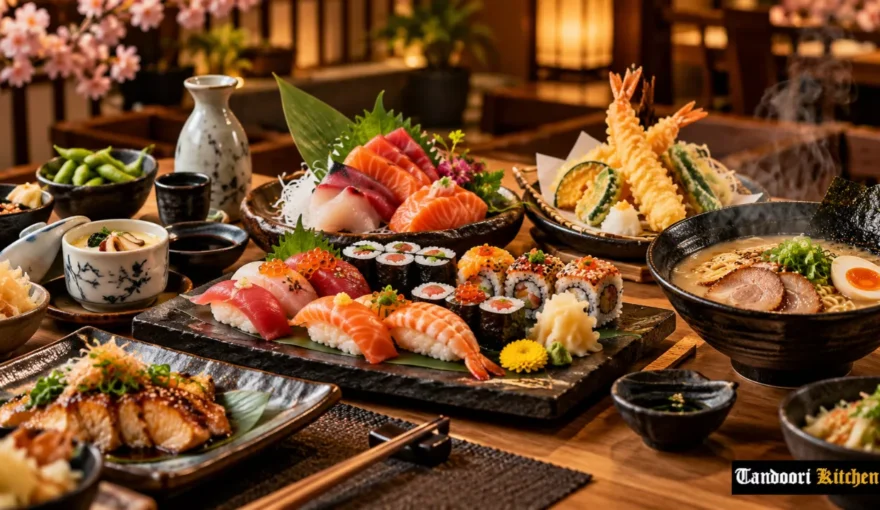
Sushi is usually the centrepiece of any opening menu. Sushi rice is seasoned with vinegar, so it should taste lightly tangy and hold its shape without being packed tight. Sashimi is sliced raw fish served without rice, which makes quality and handling very visible.
If you’re new to raw fish, start with salmon or tuna nigiri, then try a simple roll such as cucumber or avocado. Ask staff what arrived fresh that day, since good restaurants are happy to guide you. People who are pregnant or have weakened immune systems are generally advised to avoid raw fish, so cooked options like tempura rolls or grilled eel are a safer choice.
Hot Dishes: Ramen, Tempura, Yakitori and More
Cooked dishes show a kitchen’s range. Ramen is built around its broth, which may be pork-bone (tonkotsu), soy-based (shoyu), miso or salt (shio), so the style you choose changes the whole experience. Tempura, when done well, comes out light and crisp rather than oily. Yakitori, skewered chicken grilled over heat and finished with salt or tare sauce, is a popular, casual favourite.

For a hearty meal, katsu curry (breaded cutlet with Japanese-style curry) and teriyaki grilled fish or chicken are dependable crowd-pleasers, especially for families and anyone who prefers cooked food.
Quick Guide to Popular Opening Dishes
| Dish | What It Is | Best For | Dietary Notes |
|---|---|---|---|
| Salmon nigiri | Sliced raw salmon over seasoned rice | First-time sushi eaters | Contains raw fish, soy sauce (wheat) |
| Tonkotsu ramen | Noodles in rich pork-bone broth | A filling main meal | Contains wheat, pork, often egg |
| Vegetable tempura | Battered, fried seasonal vegetables | Vegetarians and light eaters | Contains wheat; check the dipping sauce |
| Chicken yakitori | Grilled skewers with salt or tare | Sharing and casual dining | Tare often contains soy and wheat |
| Gyoza | Pan-fried dumplings | Starters or snacks | Contains wheat; fillings vary |
| Matcha dessert | Green tea-based sweets | Ending the meal lightly | May contain dairy and eggs |
Tips for Your Opening-Week Visit
New restaurants are often busy and still settling into their rhythm, so a little planning helps.
- Book ahead if possible, or arrive early to avoid long waits.
- Order in rounds: begin with starters and sushi, then add hot dishes as you go.
- Mention allergies clearly. Soy, wheat, fish, shellfish, egg and sesame are common in Japanese cooking.
- Ask about any opening specials or limited-time dishes.
- Be patient. A new kitchen may need extra time, and honest feedback helps it improve.
Frequently Asked Questions

What are the most popular dishes at a Japanese restaurant opening?
Sushi and sashimi, ramen, tempura, gyoza and yakitori are the most common choices, since they showcase a kitchen’s core skills.
Is Japanese food healthy?
Many dishes are built around fish, rice, vegetables and soup, and can be well balanced. Fried items like tempura and katsu, and salty sauces, are better enjoyed in moderation.
What should I order if I don’t eat raw fish?
Try cooked sushi rolls, tempura, yakitori, teriyaki, katsu curry, ramen or vegetable dishes. Most Japanese restaurants offer plenty of fully cooked options.
Are there vegetarian options?
Usually yes, such as vegetable tempura, agedashi tofu, cucumber and avocado rolls, and edamame. Dashi stock often contains fish, so ask whether a dish is truly vegetarian.