Fantastic Tandoori Master Class: Cook Like a Pro at Home…
A good tandoori master class teaches you why a dish works, not just what to put in the pot. Tandoori cooking looks simple: marinate, skewer, cook hot. But the difference between dry, pale chicken and juicy, lightly charred tikka comes down to a few details most recipes skip. This guide covers those details so you can cook confidently in a home kitchen, and it will also help you spot what makes tandoori food at a good Indian restaurant taste the way it does.
What Is a Tandoori Master Class, and Who Is It For?
The tandoor is a clay oven, traditionally fired with charcoal or wood, that cooks at very high heat. Food is cooked on skewers dipped into the oven, and breads like naan are slapped against its walls. A master class built around this method focuses on three skills: building a balanced marinade, controlling heat and timing, and layering spices so each dish tastes distinct. It suits beginners who want reliable results, and home cooks who love Indian food and want to understand it better.
The Marinade: Where Tandoori Flavour Begins

Almost every tandoori marinade starts with thick, strained yogurt. Its mild acidity softens the meat gently without turning it mushy, and it helps the spices cling to the surface. From there, the usual building blocks are ginger-garlic paste, lemon juice, salt, and ground spices such as cumin, coriander and garam masala. Kashmiri chilli powder is popular because it gives deep red colour without overwhelming heat.
Salt the meat first and let it sit briefly, then add the yogurt mixture. Marinating too long in an acidic mix can make chicken texture grainy, so most cooks stay within a day at the outside.
Tandoori Dishes at a Glance
Marinating and cooking times vary by cut and thickness, so treat these as practical starting points rather than fixed rules.
| Dish | Main ingredient | Typical marinade base | Typical marinating time | Cooking approach |
|---|---|---|---|---|
| Chicken tikka | Boneless thigh pieces | Yogurt, ginger-garlic, Kashmiri chilli | 4–12 hours | Very high heat, short cook |
| Tandoori chicken | Bone-in legs and thighs | Yogurt, lemon, spice blend | 8–24 hours | High heat, longer cook |
| Seekh kebab | Minced lamb or chicken | Spiced mince, herbs, no long soak | 30 minutes rest | Skewered, turned often |
| Paneer tikka | Paneer cubes | Hung curd, spices, a little gram flour | 30 minutes–2 hours | High heat, brief char |
| Garlic naan | Leavened dough | Dough rested until puffy | 1–2 hours rising | Cooked on a very hot surface |
Heat, Timing and the Home Oven Method
A traditional tandoor can reach temperatures far beyond a household oven, which is why the char is so distinctive. At home, you can get closer with a few adjustments:

- Preheat your oven to its highest setting and heat a heavy tray or pizza stone inside it.
- Use the grill (broiler) for the last few minutes to build colour.
- Choose thigh meat over breast; it stays juicier under strong heat.
- Do not crowd the tray, because steam prevents browning.
- Rest the meat for a few minutes before serving.
- Check that chicken reaches an internal temperature of 74°C (165°F) before eating.
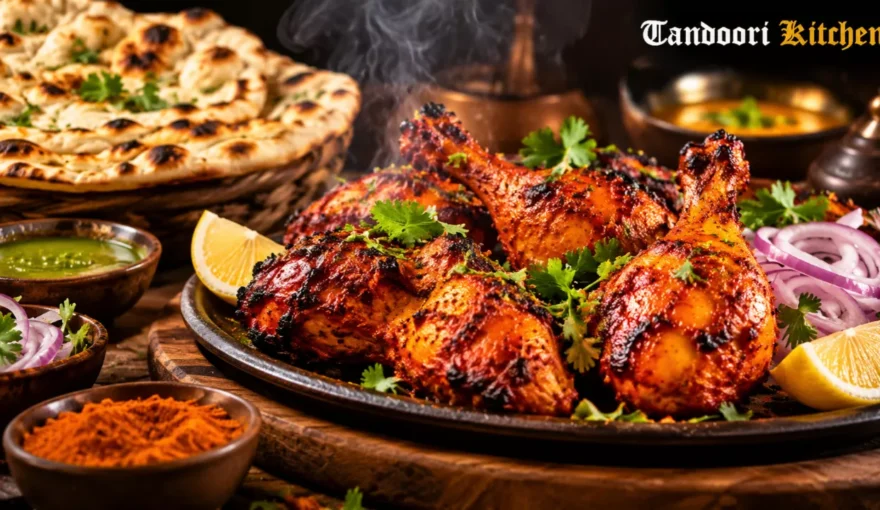
Many cooks also finish with a brush of melted butter or ghee for shine and richness. Pair the meat with naan, a squeeze of lemon, sliced onion and a cooling mint-yogurt chutney.
Common Mistakes a Master Class Helps You Avoid
Most tandoori disappointments have simple causes. Watery yogurt leads to a marinade that slides off, so drain it first. Skipping the preheat means the food steams instead of charring. Overcooking is the biggest issue, since small boneless pieces cook in minutes. Finally, balance matters: good tandoori food lets the smoke, spice and sour notes each stand out rather than blending into one heavy flavour.
Frequently Asked Questions

Can I make tandoori dishes without a tandoor?
Yes. A very hot oven with a preheated tray, plus a few minutes under the grill, gives good results. A barbecue also works well for smoky flavour.
How long should I marinate chicken for tandoori?
Boneless pieces usually need 4–12 hours, and bone-in pieces benefit from 8–24 hours. Avoid going much beyond a day.
Is tandoori food always very spicy?
No. Heat level depends on the chilli you use. Kashmiri chilli adds colour with mild heat, and you can adjust the amount to suit your taste.
Are there good vegetarian tandoori options?
Yes. Paneer, mushrooms, cauliflower and capsicum all take well to a yogurt-based marinade and high heat.