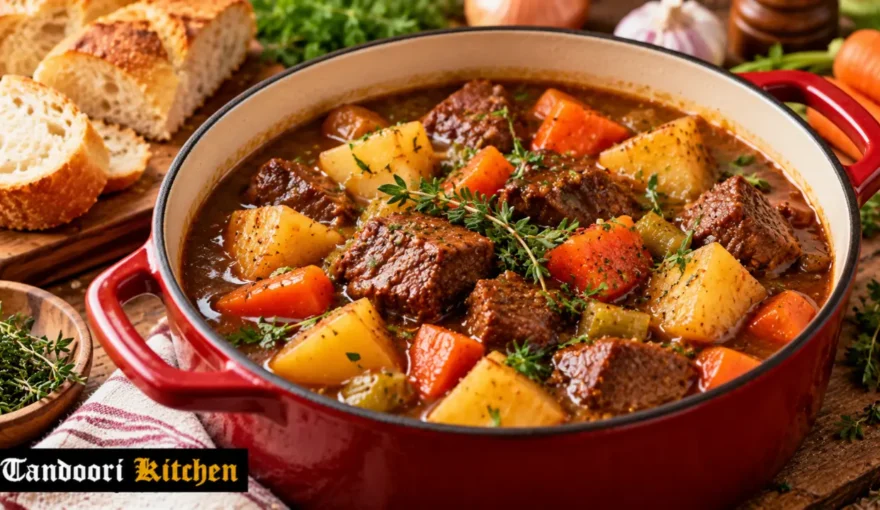
Easy Beef Stew Recipe: Tender Beef, Hearty Vegetables and Rich Gravy
Few dishes feel as comforting as a bowl of beef stew on a cool evening. You get soft chunks of beef, vegetables that soak up all the flavour, and a thick gravy that begs for a piece of crusty bread.
Many people assume a great stew needs a fancy cut of meat or a long list of ingredients. It doesn’t. The real secrets are choosing the right cut, browning it properly and giving it time.
This recipe keeps things simple. Once it’s in the pot, the stove does most of the work.

Why This Beef Stew Works
A good stew comes down to three things:
- The right cut. Tougher, well-marbled cuts become tender with slow cooking.
- Deep browning. Searing the beef builds the rich, savoury base of the gravy.
- Low, slow heat. A gentle simmer breaks down connective tissue. A rolling boil only toughens the meat.
Get these right and the rest is easy.

Ingredients
Serves: 4–6
Prep time: 20 minutes
Cook time: about 2 to 2½ hours
For the beef

- 1 kg (about 2 lb) beef chuck, cut into 4–5 cm (1½–2 inch) cubes
- Salt and black pepper
- 2 tbsp all-purpose flour
- 2–3 tbsp oil
For the stew
- 1 large onion, chopped
- 3–4 garlic cloves, minced
- 2 tbsp tomato paste
- 1 litre (4 cups) beef stock
- 1 tbsp Worcestershire sauce
- 2 bay leaves
- 1 tsp dried thyme (or a few fresh sprigs)
- 3 carrots, cut into thick chunks
- 2 celery sticks, sliced (optional)
- 3–4 medium potatoes, cubed
- 1 cup peas (optional, added at the end)
- Fresh parsley or coriander, for garnish
Optional: Swap 1 cup of the stock for red wine for a deeper, richer flavour.
Step-by-Step Method
1. Prep and season the beef
Pat the beef cubes dry with a paper towel. Dry meat browns, while wet meat steams. Season generously with salt and pepper, then toss with the flour until lightly coated.
2. Brown the beef in batches
Heat oil in a heavy-bottomed pot or Dutch oven over medium-high heat. Add the beef in a single layer without crowding the pot, and sear until each side is deep brown. Move the browned pieces to a plate and repeat with the rest.

Why batches matter: A crowded pot traps steam, and the beef turns grey instead of golden.
3. Build the flavour base
Lower the heat to medium. Add the onion to the same pot and cook until soft, scraping up the brown bits stuck to the bottom. Add the garlic and cook for a minute, then stir in the tomato paste and cook for another minute or two until it darkens slightly.
4. Deglaze and simmer
Pour in a splash of stock (or the wine, if using) and scrape the bottom of the pot well. Those browned bits are pure flavour. Add the remaining stock, Worcestershire sauce, bay leaves, thyme and the browned beef with any juices from the plate.
Bring it to a gentle boil, then reduce the heat to low. Cover with the lid slightly ajar and simmer for about 1½ hours, stirring now and then.
5. Add the vegetables
Stir in the carrots, celery and potatoes. Make sure they’re mostly submerged, adding a little water or stock if needed. Simmer for another 30–45 minutes, until the beef is fork-tender and the vegetables are soft.
6. Finish and serve
Remove the bay leaves. If using peas, stir them in for the last 5 minutes. Taste and adjust the salt and pepper. Garnish with chopped parsley or coriander and serve hot.
How to Get a Thicker, Richer Gravy
If your stew is thinner than you’d like, try one of these fixes:
- Simmer uncovered for the last 15–20 minutes so the liquid reduces.
- Mash a few potato pieces against the side of the pot and stir them back in.
- Use a slurry. Mix 1 tbsp cornflour with 2 tbsp cold water and stir it into the simmering stew until it thickens.
Other Ways to Cook It
- Oven: After step 4, cover the pot and transfer it to an oven at about 160°C (325°F). Add the vegetables halfway through.
- Slow cooker: Brown the beef and the aromatics first, then cook everything on low for 7–8 hours.
- Pressure cooker: Cook the beef with the stock for about 35 minutes at high pressure, release the pressure, add the vegetables and cook briefly until tender.
Cooking times vary by appliance, so check your manufacturer’s guidance.
Tips From the Kitchen
- Choose chuck over lean cuts. Lean meat dries out with long cooking, while chuck stays juicy.
- Cut the vegetables large. Small pieces turn to mush over a long simmer.
- Make it a day ahead. Like many stews, it often tastes even better the next day once the flavours settle.
- Season at the end. Stock can be salty, and the liquid reduces as it cooks, so do the final salting last.
What to Serve With Beef Stew
- Crusty bread or garlic bread for dipping
- Steamed rice
- Mashed potatoes, if you skipped the potatoes in the stew
- A crisp green salad to balance the richness
Storing and Reheating
Cool leftovers quickly and refrigerate them in an airtight container for up to 3–4 days. Beef stew also freezes well for up to about 3 months, though potatoes can turn slightly grainy after thawing.
Reheat gently on the stove, adding a splash of stock or water if the gravy has thickened too much.
The Bottom Line
A great beef stew doesn’t need complicated techniques. It needs the right cut, a proper sear and a little patience. Get those three things right and you’ll have a pot of tender beef and rich gravy that tastes like it took far more effort than it did.