10 Most Popular Italian Pizzas and What Makes Them Special…
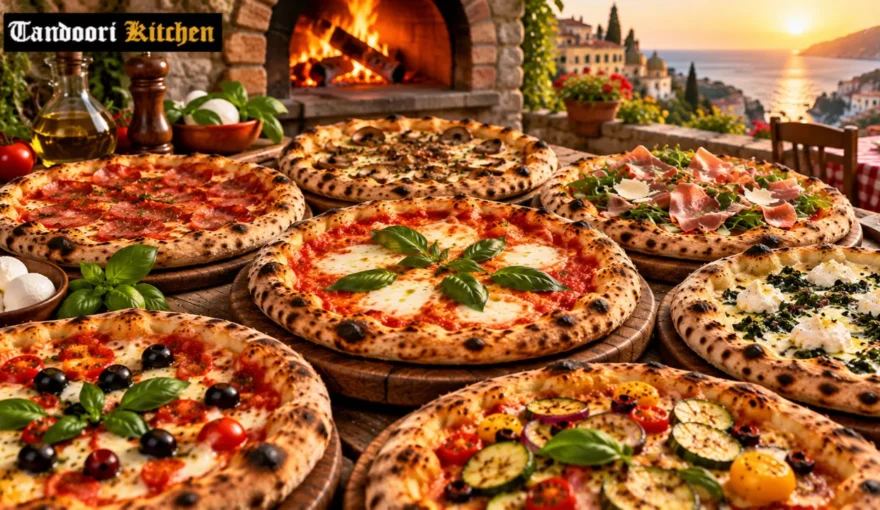
Italian pizza looks simple, but the most popular Italian pizzas are built on restraint: a well-fermented dough, a handful of quality toppings, and a very hot oven. Pizza began as everyday food in Naples, and the craft of the Neapolitan pizza maker is now recognised by UNESCO as part of the world’s cultural heritage. Whether you are ordering in a restaurant or planning a pizza night at home, knowing the classics helps you order with confidence and spot the real thing.
What Makes Italian Pizza Different?
Most traditional Italian pizzas are thinner and lighter than their takeaway cousins. The base is soft in the centre with a puffy, lightly charred edge, and toppings are used sparingly so the dough, tomato and cheese can all be tasted. Italians generally treat pizza as a single-serve meal, so each person orders their own rather than sharing a large pie.

Three things separate a great Italian pizza from an average one:
- Dough: A long, slow rise gives better flavour and a lighter, easier-to-digest crumb.
- Tomato: Ripe, lightly seasoned tomato, often crushed rather than cooked into a heavy sauce.
- Balance: Fewer toppings, so no single ingredient overpowers the rest.
The 10 Most Popular Italian Pizzas
1. Margherita. The most famous Italian pizza of all. Tomato, mozzarella and fresh basil reflect the colours of the Italian flag. A well-known story ties it to Queen Margherita of Savoy during a visit to Naples in 1889, though historians debate how much of the tale is legend.
2. Marinara. One of the oldest pizzas in Naples, made with tomato, garlic, oregano and olive oil. It has no cheese, which makes it a good choice for anyone avoiding dairy.
3. Quattro Formaggi. “Four cheeses” in English. Mozzarella is usually joined by gorgonzola, parmesan and a soft cheese such as fontina. Recipes vary, but it is always rich, creamy and savoury.
4. Quattro Stagioni. The “four seasons” pizza is divided into four sections, traditionally topped with artichokes, ham, mushrooms and olives, each representing a season.
5. Capricciosa. Similar ingredients to the Quattro Stagioni, but spread across the whole pizza instead of sectioned. The name means “capricious”, a nod to the mix of toppings.

6. Diavola. The “devil’s pizza” is topped with spicy salami and sometimes a drizzle of chilli oil. It is the go-to for anyone who likes heat. Note that in Italy, “pepperoni” refers to peppers, so spicy salami is what you will find on a Diavola.
7. Prosciutto e Funghi. Cooked ham and mushrooms over tomato and mozzarella. It is a mild, comforting classic found in nearly every pizzeria in Italy.

8. Prosciutto e Rucola. Cured ham and fresh rocket (arugula) are typically added after baking, so the greens stay crisp and peppery against the salty ham.
9. Napoli. Tomato, mozzarella, anchovies and often capers or olives. It is salty, bold and a favourite with lovers of strong flavours.
10. Calzone. A folded pizza stuffed with ingredients such as ricotta, mozzarella and ham, then baked or fried. It is the portable, pocket-style member of the family.
Italian Pizzas at a Glance
| Pizza | Key Toppings | Flavour Profile | Good For |
|---|---|---|---|
| Margherita | Tomato, mozzarella, basil | Fresh, light, balanced | First-timers, kids |
| Marinara | Tomato, garlic, oregano | Herby, tangy, no cheese | Dairy-free diets |
| Quattro Formaggi | Four cheeses | Rich, creamy, savoury | Cheese lovers |
| Quattro Stagioni | Artichokes, ham, mushrooms, olives | Earthy, varied | Those who like variety |
| Capricciosa | Ham, mushrooms, artichokes, olives | Savoury, hearty | Classic mixed toppings |
| Diavola | Spicy salami, tomato, mozzarella | Hot, smoky | Spice fans |
| Prosciutto e Funghi | Ham, mushrooms | Mild, comforting | Easy crowd-pleaser |
| Prosciutto e Rucola | Cured ham, rocket, parmesan | Salty, peppery, fresh | Lighter, gourmet taste |
| Napoli | Anchovies, capers, mozzarella | Salty, bold | Strong-flavour fans |
| Calzone | Ricotta, mozzarella, ham | Rich, filling | Hearty appetites |
How to Choose the Right Italian Pizza
If you are unsure where to start, match the pizza to your mood. For something light and classic, go with a Margherita. If you want comfort, try Prosciutto e Funghi or a Capricciosa. For heat, pick the Diavola, and for indulgence, the Quattro Formaggi will not disappoint. Vegetarians can look to Margherita, Marinara or a vegetable-led pizza, while anyone avoiding dairy should start with the Marinara.
A few simple tips will improve any pizza experience:
- Eat it fresh from the oven, as the crust is at its best in the first few minutes.
- Pair rich pizzas with something acidic, such as a light red wine or sparkling water with lemon.
- Try one classic before experimenting. A Margherita is a reliable way to judge a pizzeria’s dough and tomato.
Making Great Italian Pizza at Home
Home cooks can get surprisingly close to restaurant results. Let the dough rest slowly, ideally in the fridge for a day, which develops flavour. Heat your oven as high as it will go, preheat a pizza stone or heavy tray, and keep toppings minimal so the base cooks through. Drain fresh mozzarella well to avoid a watery centre, and add delicate ingredients like basil and rocket after baking.
FAQs
What is the most popular pizza in Italy?
The Margherita is widely considered the most popular and iconic Italian pizza, followed closely by the Marinara and Prosciutto e Funghi.
Is pepperoni a traditional Italian pizza topping?
Not in the way many people expect. In Italian, “peperoni” means peppers. The closest traditional equivalent to pepperoni pizza is the Diavola, topped with spicy salami.
What is the difference between Quattro Stagioni and Capricciosa?
Both use ham, mushrooms, artichokes and olives. On a Quattro Stagioni the toppings are arranged in four separate sections, while on a Capricciosa they are mixed across the pizza.
Which Italian pizza is vegetarian?
Margherita and Marinara are naturally vegetarian, and a Quattro Formaggi is too, though some cheeses may use animal rennet, so check with the restaurant if this matters to you.