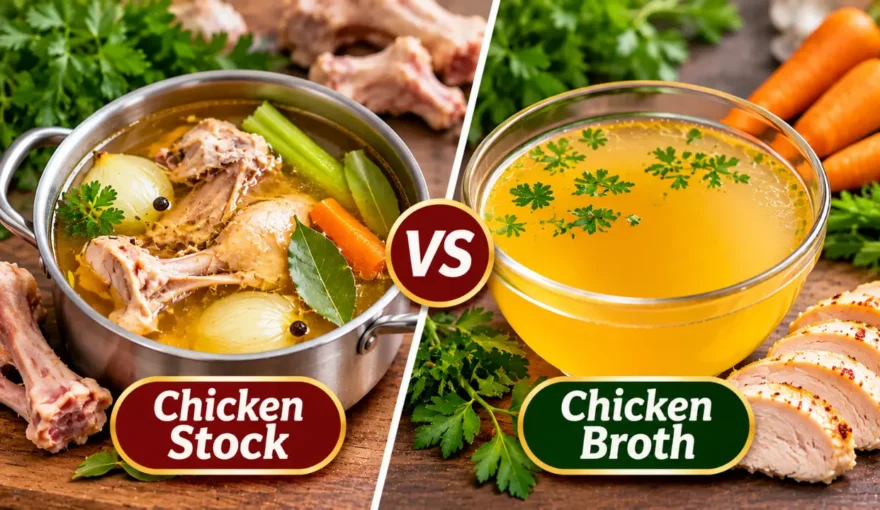
Chicken Stock vs Chicken Broth: What’s the Difference and When Should You Use Each?
Walk down the soup aisle and you’ll see cartons of chicken stock and chicken broth sitting side by side. Many recipes call for one or the other, and plenty of home cooks use them interchangeably. But are they actually the same thing? Not quite. While they’re closely related, stock and broth are made differently and have slightly different flavours and textures. Here’s what sets them apart and how to choose the right one for your cooking.
What Is Chicken Stock?
Chicken stock is made mainly from chicken bones, often with some meat still attached, simmered in water with vegetables like onion, carrot and celery and aromatics such as bay leaves and peppercorns. The bones are sometimes roasted first for a deeper, richer flavour.

Stock is simmered for a long time, usually several hours. During this process, collagen from the bones and connective tissue breaks down into gelatin. That’s why homemade chicken stock often sets into a jelly when chilled. This gives stock a fuller body and a silky texture that adds richness to sauces, gravies and stews.
Traditionally, stock is left unseasoned or only lightly seasoned, so cooks can control the salt in the final dish.
What Is Chicken Broth?
Chicken broth is made mainly from chicken meat, sometimes with a few bones, simmered with vegetables and herbs. It’s cooked for a shorter time than stock, typically an hour or two.
Because it relies more on meat than bones, broth is lighter and thinner, with less gelatin. It’s also usually seasoned with salt and herbs, making it flavourful enough to enjoy on its own. That’s why broth is often served as a simple soup or sipped when someone is feeling under the weather.
What About Bone Broth?
Bone broth sits somewhere in between. Like stock, it’s made from bones and simmered for a very long time, often 12 hours or more, to extract as much gelatin and flavour as possible. But like broth, it’s seasoned so it can be sipped on its own. It has become popular as a warm drink and is often marketed for its protein content.
Chicken Stock vs Chicken Broth at a Glance
| Feature | Chicken Stock | Chicken Broth | Bone Broth |
|---|---|---|---|
| Main ingredient | Bones (some meat) | Meat (some bones) | Bones |
| Cooking time | Several hours | 1–2 hours | Often 12+ hours |
| Texture | Rich, full-bodied, may gel when chilled | Light and thin | Rich and gelatinous |
| Seasoning | Usually unseasoned or lightly seasoned | Seasoned | Seasoned |
| Best for | Sauces, gravies, stews, risotto | Soups, sipping, light dishes | Sipping, soups |
| Flavour | Deep and savoury | Light and meaty | Deep and savoury |
When to Use Chicken Stock
Choose stock when you want body and richness in a dish. Its gelatin helps thicken and add a glossy finish to:
- Gravies and pan sauces
- Risotto
- Braises and stews
- Pot pies
- Reductions and glazes

Because it’s usually unseasoned, stock also gives you more control over the final salt level, which is especially important when reducing liquids, as flavours become more concentrated.

When to Use Chicken Broth
Choose broth when you want a light, ready-seasoned liquid. It works well for:
- Chicken noodle soup and other light soups
- Cooking rice, quinoa and other grains
- Steaming vegetables
- Thinning sauces
- Sipping on its own
Can You Swap One for the Other?
Yes, in most recipes you can use chicken stock and chicken broth interchangeably. In fact, many store-bought brands use the terms almost interchangeably, so the difference in cartons is often smaller than with homemade versions. Just keep these tips in mind:
- Adjust the salt. If you swap stock for broth, you may need to add more seasoning. If you swap broth for stock, taste before adding extra salt.
- Expect a different body. Broth won’t give sauces quite the same richness as stock.
- Choose low-sodium options. Low-sodium or unsalted versions give you the most flexibility in cooking.
Tips for Buying and Storing
- Read the label. Check the ingredients and sodium content, as these can vary widely between brands.
- Look for simple ingredients. The best options list chicken, vegetables and herbs near the top.
- Store it safely. Once opened, keep cartons in the fridge and use within about four to five days, or as the label recommends. Homemade stock or broth keeps for three to four days in the fridge.
- Freeze extras. Freeze leftovers in ice cube trays or containers for easy portions. They’ll keep for several months.
The Bottom Line
Chicken stock and chicken broth are close cousins, but they’re not identical. Stock is made mainly from bones, simmered longer and usually left unseasoned, giving it a rich body that’s perfect for sauces, gravies and stews. Broth is made mainly from meat, cooked for less time and seasoned, making it lighter and ideal for soups and sipping. In most recipes they can be swapped, as long as you adjust the seasoning to taste.
FAQ
Is chicken stock the same as chicken broth?
Not exactly. Stock is made mostly from bones and simmered longer, giving it a richer body, while broth is made mostly from meat, cooked for less time and seasoned.
Can I use chicken broth instead of chicken stock?
Yes. In most recipes they’re interchangeable. Just taste and adjust the salt, as broth is usually seasoned.
Which is healthier, chicken stock or broth?
Both can be part of a healthy diet. Stock and bone broth often contain more gelatin and protein, while broth may be higher in sodium. Choosing low-sodium versions is a good idea.
Why does homemade chicken stock turn to jelly in the fridge?
Long simmering breaks down collagen from the bones into gelatin, which sets when chilled. It melts back into liquid when heated.
Bolded anchor phrases to link: chicken stock, chicken broth, chicken bones, collagen, gelatin, unseasoned, chicken meat, lighter, seasoned, bone broth.
Source: Click here to view source