Skip Expensive Beef: 5 Cheaper Cuts That Make Incredible Homemade Stew
When you’re shopping for stew, the priciest cut in the case is usually the wrong one. Ribeye, tenderloin and filet mignon are prized because they’re tender, and that’s exactly why they don’t suit a long, slow simmer.
Stew works the opposite way. Tender cuts dry out and turn chewy when cooked for hours, while tougher, cheaper cuts are packed with connective tissue that melts into a rich, silky sauce.

That’s why stew has been a budget meal for centuries. It was built around whatever cuts were available, and the hardest-working muscles on the animal, like the shoulder, chest and legs, are often the most flavorful.
So before you spend big at the butcher counter, here are five cheaper cuts that make a better pot of stew.
The Cheaper Cuts Worth Buying
Chuck and Round
Beef chuck comes from the shoulder and is the classic choice. It’s well marbled, has plenty of connective tissue and stays juicy after long cooking. Chuck steak and chuck roast both work. Round comes from the rear leg and is usually slightly cheaper, which is why it often ends up in pre-cut stew packs. It’s leaner, so don’t skip the browning and the long simmer. Avoid top round, which is too lean.
Brisket and Short Rib
Brisket is one of the least expensive boneless cuts, taken from the breast, and it turns tender when slow-cooked. Bone-in short rib costs more than chuck but still much less than a steak, and it adds richness to the broth.
Beef Shank
Beef shank comes from just above the hooves. It’s a budget-friendly cut that rewards a long braise, and the bone adds body to your stew.
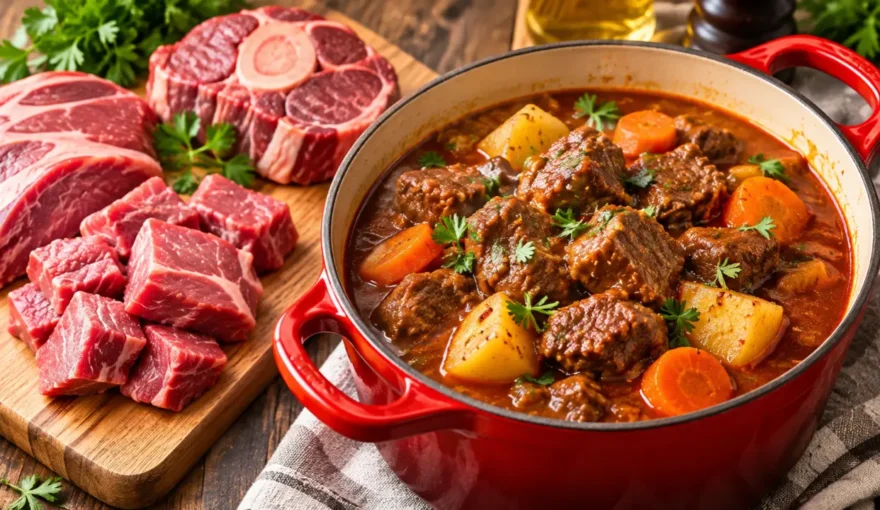
Quick tips for better results:
- Cut the beef into 1 to 2 inch chunks so it cooks evenly
- Brown it well first for deeper flavor
- Simmer low and slow until the meat falls apart
| Cut | Comes from | Why it works in stew |
|---|---|---|
| Chuck | Shoulder | Marbled, plenty of collagen, the classic pick |
| Round | Rear leg | Lean, slightly cheaper, great with a long simmer |
| Brisket | Breast | Affordable, turns tender when slow-cooked |
| Short rib | Plate | Rich, bone-in, adds body |
| Shank | Lower leg | Budget-friendly, bone adds depth |

Prices vary by store and region. Chuck is usually the safest all-rounder.
If you want the simplest option, buy a chuck roast and cube it yourself. Pre-cut “stew meat” is convenient, but it’s usually chuck or round, and sometimes trimmings from other cuts, so buying a whole roast gives you more consistent pieces.
Frequently Asked Questions
What is the best cheap cut of beef for stew?
Beef chuck is the most popular choice, thanks to its marbling and connective tissue, and it’s usually affordable.
Can I use expensive steak in stew?
It’s not recommended. Tender cuts like filet mignon become dry and chewy when cooked for a long time, so save them for the grill.
Is round or chuck better for stew?
Chuck has more connective tissue and richer flavor. Round is usually a little cheaper and leaner, so it needs a slow, gentle simmer.
Source: Click here to view source