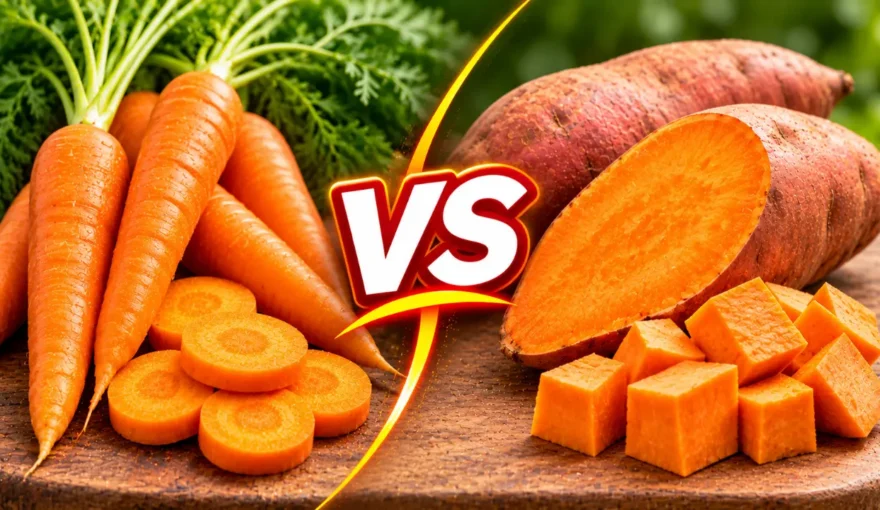
Carrots vs. Sweet Potatoes: Which Has More Vitamin A?
Carrots have a reputation as the go-to vegetable for vitamin A. Generations of children were told to eat them for better eyesight. But the bright orange sweet potato is a serious contender.
So which is the real vitamin A champion? Here’s how they compare, why it matters and how to get the most out of each.
How Vitamin A Works in Orange Vegetables

Neither carrots nor sweet potatoes contain vitamin A in its ready-made form. Instead, they’re packed with beta-carotene, the orange pigment your body turns into vitamin A as it needs it.
Because of this, nutrition labels measure vitamin A in retinol activity equivalents (RAE), a unit that takes that conversion into account. The adult daily value (DV) for vitamin A is 900 micrograms (mcg) RAE.
The Winner: Sweet Potatoes (Just)
Measured gram for gram, the two are closer than most people expect. Both are among the richest vitamin A foods you can eat. Per 100 grams, cooked sweet potato edges ahead of raw carrots.
Real portion sizes make the gap clearer. According to the US National Institutes of Health, one whole sweet potato baked in its skin provides about 1,403 mcg RAE, or roughly 156% of the daily value. Half a cup of raw carrots provides about 459 mcg RAE, around 51% of the daily value.
People usually eat a whole sweet potato in one sitting, but only a handful of carrot sticks. So in a typical serving, the sweet potato comes out well ahead.
Carrots Are Still a Vitamin A Powerhouse
That doesn’t make carrots second-rate. Half a cup still gives you about half your daily vitamin A, and carrots cost little, last for ages in the fridge and are easy to snack on raw.

Carrots also bring other things with them: fibre, potassium, vitamin K and other carotenoids such as alpha-carotene and lutein. And a cup of cooked carrots narrows the gap with sweet potato considerably.
Carrots vs. Sweet Potatoes at a Glance
| Carrots | Sweet potatoes | |
|---|---|---|
| Vitamin A source | Beta-carotene (plus alpha-carotene) | Beta-carotene |
| Typical serving | ½ cup raw | 1 whole, baked in skin |
| Vitamin A per serving | ~459 mcg RAE (~51% DV) | ~1,403 mcg RAE (~156% DV) |
| Calories per serving | Very low | Moderate (starchy vegetable) |
| Other strengths | Fibre, vitamin K, crunchy raw snack | Fibre, potassium, vitamin C, filling carbs |
| Best eaten | Raw or cooked | Baked, roasted or mashed |
Figures based on US National Institutes of Health data. Values vary with size and variety.
How to Absorb More Vitamin A From Both
Beta-carotene is fat-soluble, so your body absorbs it much better when you eat a little fat at the same time. A drizzle of olive oil on roasted vegetables, a bit of butter on a baked sweet potato or hummus with carrot sticks all help.
Cooking helps too. Heat breaks down plant cell walls and releases more beta-carotene, so cooked carrots can actually give you more usable vitamin A than raw ones. Steaming, roasting and baking work well. Long boiling in lots of water is less ideal.
Can You Get Too Much?
Not from these vegetables. Your body only converts as much beta-carotene into vitamin A as it needs, so eating lots of carrots or sweet potatoes won’t cause vitamin A toxicity. The most that will happen is carotenemia, a harmless yellow-orange tinge to the skin that fades once you cut back.
High-dose vitamin A supplements and very large amounts of liver are different. They contain ready-made vitamin A, which can build up in the body. Pregnant women in particular should check with a doctor before taking vitamin A supplements.
The Bottom Line
Sweet potatoes win on vitamin A per serving: one baked sweet potato more than covers a full day’s needs. Carrots are a close, cheaper and more versatile second. You don’t have to choose. Eating both regularly, ideally with a little healthy fat, is one of the easiest ways to keep your vitamin A intake topped up.
Frequently Asked Questions
Do carrots or sweet potatoes have more vitamin A?
Sweet potatoes, especially per typical serving. One whole baked sweet potato provides about 156% of the daily value, compared with about 51% in half a cup of raw carrots.
Are cooked carrots higher in vitamin A than raw?
Cooking makes beta-carotene easier for your body to absorb, so lightly cooked carrots can give you more usable vitamin A than raw ones.
Can eating too many carrots turn your skin orange?
Yes, but it’s harmless. Eating lots of beta-carotene can cause carotenemia, a temporary orange tint to the skin that fades when you eat less.
Do I need to eat fat with carrots and sweet potatoes?
It helps. Beta-carotene is fat-soluble, so a little oil, butter or another healthy fat improves how much vitamin A your body absorbs.
Source: Click here to view source