Red, Yellow, Orange, or Green Peppers: Which Is Best for Nutrition?
Stand in front of the pepper display at any supermarket and you’ll see the same colours lined up in a row. The red ones usually cost the most and the green ones the least. So are you paying for nutrition or just for looks?
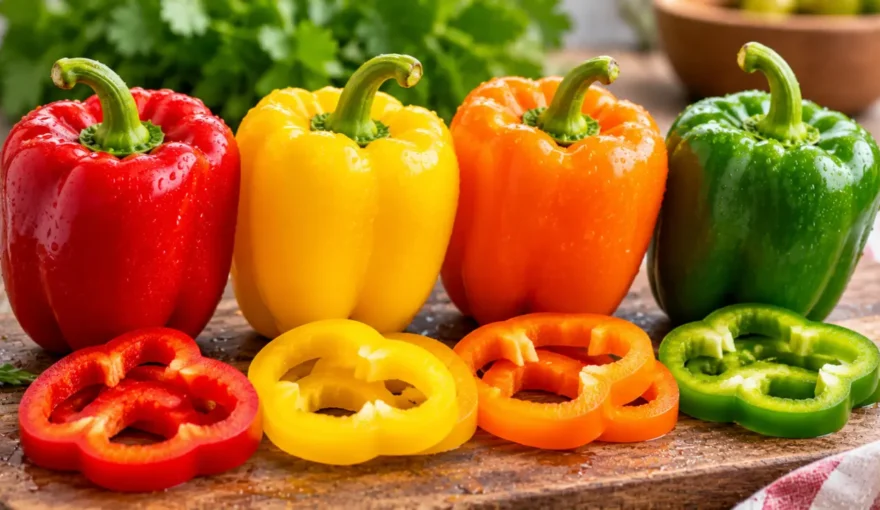
Peppers of different colours aren’t usually different vegetables. In most cases they’re the same plant picked at different stages. Bell peppers start out green and, if left on the vine, ripen through yellow and orange to red. That longer ripening changes their flavour, sweetness and nutrients.
Why Pepper Colour Changes the Nutrition

Green peppers are picked before they’re fully ripe, which is why they taste slightly bitter and grassy. As a pepper keeps ripening, it builds up more natural sugars and more carotenoids, the plant pigments behind the yellow, orange and red colours. Some carotenoids, like beta-carotene, can be turned into vitamin A in the body.
Ripening takes extra weeks on the plant. That’s the main reason red, yellow and orange peppers cost more than green ones.
Red Peppers: The All-Round Nutrition Winner
If you have to choose one, red peppers have the best overall nutrition. They’re fully ripe, so they have the most beta-carotene by a long way, many times more than green peppers. That makes them the best colour for vitamin A, which supports eye health, skin and immune function.
Red peppers are also rich in vitamin C. A 100-gram serving (about a cupped handful of strips) contains more vitamin C than you’d get from a typical orange. They’re the sweetest colour, too, which makes them great raw in salads and snack boxes.
Yellow Peppers: The Vitamin C Champion
This one surprises people: yellow peppers often top the list for vitamin C. According to USDA figures reported by Tufts University’s Health & Nutrition Letter, yellow peppers contain about 184 mg of vitamin C per 100 grams, compared with about 80 mg in green peppers.
That’s more than double. A single serving of yellow pepper can more than cover an adult’s daily vitamin C needs. Yellow peppers have less beta-carotene than red ones, but they’re still a strong pick.
Orange Peppers: A Good Middle Ground

Orange peppers sit between yellow and red. They’re often praised for eye-friendly carotenoids, including zeaxanthin and lutein, which collect in the retina and help filter harsh light. Exact amounts vary more than for other colours because orange peppers include several different varieties. Expect good amounts of both vitamin C and carotenoids.
Green Peppers: Still Worth Buying
Green peppers have the lowest vitamin C and carotenoid levels of the four, but “lowest” is relative. They still provide a useful amount of vitamin C, along with fibre and lutein. They’re also the lowest in sugar and calories, and usually the cheapest.

Their slightly bitter, savoury flavour suits stir-fries, fajitas, stuffed peppers and slow-cooked dishes, where a sweeter red pepper can sometimes taste out of place.
Pepper Colours Compared
| Colour | Ripeness | Vitamin C (approx. per 100 g raw) | Carotenoids / vitamin A | Taste | Best for |
|---|---|---|---|---|---|
| Green | Unripe | About 80 mg | Lowest (some lutein) | Slightly bitter, grassy | Cooking, budget meals |
| Yellow | Partly to fully ripe | About 180 mg | Moderate | Mild, sweet | Maximum vitamin C |
| Orange | Ripe | High (varies by variety) | High in zeaxanthin and lutein | Sweet, fruity | Eye-health carotenoids |
| Red | Fully ripe | About 125–150 mg | Highest beta-carotene | Sweetest | Best all-round nutrition |
Values are approximate. They vary with variety, growing conditions and storage.
How to Get the Most Nutrition From Peppers
Vitamin C breaks down with heat and water, so eating peppers raw or lightly cooked keeps more of it. Quick stir-frying or roasting is better than long boiling.
Carotenoids work the other way. Your body absorbs them better when peppers are cooked a little and eaten with some fat, such as a drizzle of olive oil. Mixing raw and cooked peppers through the week covers both.
Store whole peppers in the fridge crisper drawer and use them within about a week. Once cut, keep them in an airtight container and eat them within a few days.
So, Which Pepper Should You Buy?
Red peppers give the best overall nutrition, yellow peppers give the most vitamin C, orange peppers are a strong source of eye-friendly carotenoids, and green peppers are the best value. A mix of colours is better than any single one, so if the multi-colour bag is on special, it’s a good buy.
Frequently Asked Questions
Which colour pepper has the most vitamin C?
Yellow peppers usually have the most, at around 184 mg per 100 grams, according to USDA data. Red peppers are close behind.
Are red peppers healthier than green peppers?
Overall, yes. Red peppers are fully ripe and contain much more beta-carotene and more vitamin C than green peppers. Green peppers are still nutritious, though, and lower in sugar.
Are different coloured peppers different plants?
Usually not. Most green, yellow, orange and red bell peppers are the same plant picked at different stages of ripeness, although some varieties are bred to ripen to a specific colour.
Is it better to eat peppers raw or cooked?
Both have benefits. Raw peppers keep more vitamin C, while lightly cooked peppers eaten with a little oil make carotenoids easier to absorb.
Source: Click here to view source