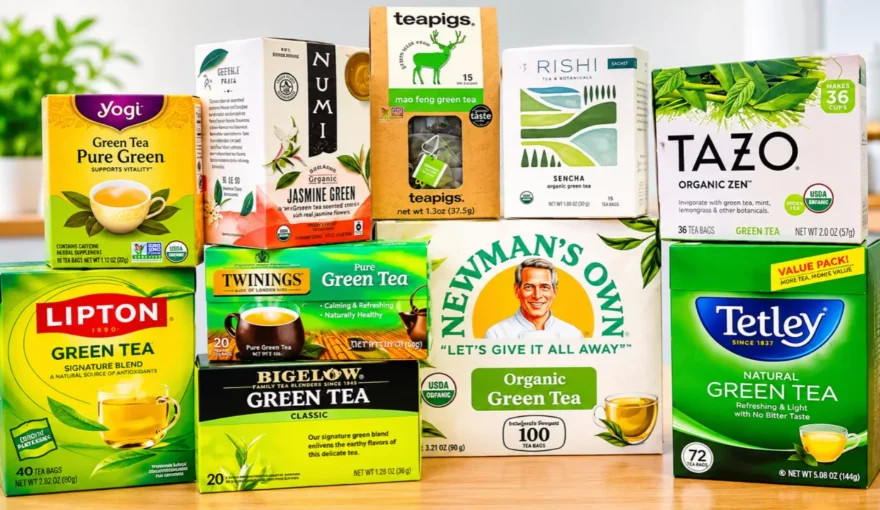
The 10 Most Popular Green Teas, Tested and Ranked…
Many people say they “don’t like green tea,” but they have usually only tried one harsh, grassy cup. A proper green tea taste test changes that quickly. When you line up several teas side by side, the differences become obvious. Some taste sweet and nutty, while others taste like seaweed or toasted rice. A few still taste like bitter lawn clippings. Usually, the tea itself is not the whole problem. How it was processed matters a lot, and so does how it was brewed.
What a Green Tea Taste Test Actually Reveals
Tasting green teas side by side shows you more than which brand you prefer. It also teaches you what quality tastes like. Good green tea has a clean finish and a hint of natural sweetness. It also has a pleasant savoriness that tea drinkers often call umami. Lower-quality teas, by contrast, tend to taste flat, dusty or sharply astringent.
When you run your own comparison, judge each cup on a few simple points:

- Aroma: Fresh teas smell grassy, floral or nutty. Stale tea smells like cardboard.
- Color: A bright yellow-green or pale gold liquor usually signals freshness. A dull brown one often means old leaves or water that was too hot.
- Body: Notice whether the tea feels thin and watery or smooth and rounded.
- Finish: A good cup leaves a gentle sweetness behind, not a dry, puckering bitterness.
Japanese vs. Chinese Green Tea: Why They Taste So Different
The biggest flavor divide in any green tea taste test comes from processing. Japanese green teas such as sencha are usually steamed right after picking. As a result, they taste vivid and vegetal, with a marine, almost brothy edge. Chinese green teas such as Longjing (Dragon Well) are typically pan-fired instead. That step gives them a softer, toastier and nuttier character.
Neither style is better. However, knowing which one you enjoy makes shopping much easier. If you like savory, intense flavors, start with Japanese teas. If you prefer something mellow and roasty, Chinese pan-fired teas are a safer bet.

Popular Green Tea Styles at a Glance
| Tea Style | Origin | Processing | Flavor Profile | Best For |
|---|---|---|---|---|
| Sencha | Japan | Steamed | Grassy, bright, slightly savory | Everyday drinking |
| Gyokuro | Japan | Shade-grown, steamed | Rich, sweet, strong umami | Special occasions |
| Genmaicha | Japan | Blended with toasted rice | Nutty, warm, popcorn-like | Beginners |
| Matcha | Japan | Shade-grown, stone-ground powder | Creamy, vegetal, intense | Lattes and whisked tea |
| Longjing (Dragon Well) | China | Pan-fired | Chestnut-like, smooth, mellow | Bitterness-sensitive drinkers |
| Jasmine Green | China | Scented with jasmine blossoms | Floral, fragrant, light | After meals |
Tea Bags vs. Loose Leaf: Does It Matter?
Convenience matters, and plenty of bagged green teas make a perfectly pleasant cup. Still, most tasters notice a difference once they compare bags with loose leaf. Standard tea bags often hold small, broken leaf pieces called fannings. These release flavor fast, including bitter compounds. Loose-leaf tea, on the other hand, uses larger leaves that unfold slowly and give a more layered taste.
Fortunately, there is a middle ground. Pyramid-style sachets give whole leaves more room to expand, so they usually taste closer to loose leaf. Whichever format you choose, check the packaging date. Green tea loses its freshness faster than black tea, so a recently packed box will almost always taste better.

How to Brew Green Tea So It Tastes Its Best
Even the best tea can taste harsh if you brew it badly. In fact, boiling water is the most common reason people dislike green tea. Water that is too hot pulls out bitter catechins quickly and dulls the delicate sweetness.

Follow these simple guidelines for a smoother cup:
- Cool your water. Aim for roughly 70–80°C (160–180°F). If you have no thermometer, let boiled water rest for a few minutes.
- Keep steeps short. Most green teas need only 1 to 3 minutes. Taste early, then add time if needed.
- Use enough tea. About 2 grams of leaf, or one bag, per 240 ml (8 oz) cup is a good starting point.
- Resteep good leaves. Quality loose-leaf tea can often give two or three infusions, and each one tastes slightly different.
Gyokuro and other delicate teas prefer even cooler water. Genmaicha and roasted styles, meanwhile, handle slightly hotter temperatures.
Choosing the Right Green Tea for You
In the end, the “best” green tea depends on your palate. For a first green tea taste test at home, pick three contrasting styles, such as a sencha, a genmaicha and a Chinese pan-fired tea. Brew them at the same temperature and steep time so the comparison stays fair. Then sip them in order from lightest to boldest.
You will probably find that one style clicks right away. From there, try a few brands within that style to compare freshness and value. Above all, keep notes. A few words about aroma, sweetness and finish will help you remember what you liked long after the cups are empty.
Frequently Asked Questions
Why does my green tea taste bitter?
It is usually brewed with water that is too hot or steeped for too long. Try water around 75°C (170°F) and a steep time of 1 to 2 minutes.
Which green tea is best for beginners?
Genmaicha and Chinese pan-fired teas like Longjing are good starting points. They taste milder, nuttier and less grassy than many Japanese teas.
How much caffeine is in green tea?
A typical cup contains less caffeine than coffee and usually a bit less than black tea. Matcha is the exception: you drink the whole powdered leaf, so it often contains more.
How long does green tea stay fresh?
Unopened green tea is best within about a year of packing. After opening, store it in an airtight container away from light, heat and strong odors, and try to finish it within a few months.