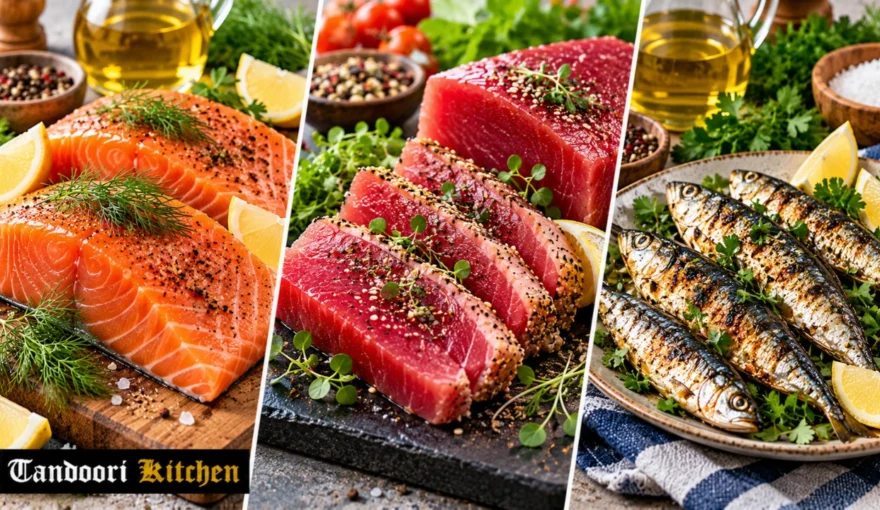
Salmon vs. Tuna vs. Sardines: Which Fish Is Best for Protein and Omega-3s?
All three of these fish have earned their place as nutrition staples, but they’re not interchangeable. Independent lab testing has actually revealed some surprising gaps between them, particularly around omega-3 content, that most people don’t realize. Here’s how salmon, tuna, and sardines really compare, and which one deserves a spot in your cart depending on what you’re after.
The Surprising Omega-3 Winner
This is where the real story is. Independent testing by ConsumerLab found that, based on standard serving sizes, sardines and salmon contained dramatically more omega-3s than tuna. Sardines delivered about 1,600 to 1,850 mg of combined DHA and EPA per 85-gram serving, canned salmon provided 400 to 700 mg per 56-gram serving, while canned tuna lagged behind at just 45 to 440 mg, with one notable albacore exception that reached 1,294 mg. In short: if omega-3s are your priority, sardines are the clear winner, not salmon, which is the fish most people assume takes the crown.
Protein: Tuna Takes the Lead
Flip to protein, and tuna pulls ahead. As the leanest of the three, tuna delivers more protein per serving with fewer calories, since less of its weight comes from fat. A 3-ounce serving of yellowfin tuna provides around 24-29 grams of protein, compared to roughly 18-24 grams in salmon and 15-25 grams in sardines (sardines vary more by brand and preparation). If you’re specifically optimizing for a high-protein, lower-calorie option, tuna is the more efficient choice.


Mercury: Sardines and Salmon Are the Safer Bets
This is a genuinely important factor, and it tips noticeably in sardines’ and salmon’s favor. Because tuna is a larger, longer-living predatory fish, it accumulates significantly more mercury than smaller fish like sardines or salmon, sometimes ten to twenty times more in the case of albacore tuna specifically. ConsumerLab’s testing found canned sardines contained mercury levels of just 0.009 to 0.028 ppm, dramatically lower than albacore tuna. The EPA lists salmon and sardines among the “best choices” for low-mercury fish, while recommending albacore tuna be limited to once or twice a week due to its comparatively higher mercury content.
A Small Caveat for Sardines: Arsenic
Sardines aren’t entirely without concerns. The same ConsumerLab testing found sardines contained arsenic levels (0.9 to 2.2 ppm) comparable to many canned tunas, though none exceeded official avoidance thresholds. The practical takeaway from that research: sardines are an excellent daily protein and omega-3 source, but it’s prudent not to exceed one serving a day, particularly with higher-arsenic brands.

Quick Comparison Table
| Factor | Salmon | Tuna | Sardines |
|---|---|---|---|
| Protein (per 3 oz) | ~18-24g | ~24-29g | ~15-25g |
| Omega-3 (DHA+EPA) | Moderate-high | Lower (varies widely by type) | Highest |
| Mercury level | Low | Higher (especially albacore) | Lowest |
| Other notable nutrients | Vitamin D, astaxanthin | Selenium, B vitamins | Calcium, vitamin B12, vitamin D |
| Arsenic | Low | Moderate | Moderate (limit to 1 serving/day) |
| Best for | Omega-3s + vitamin D | Lean protein, fewer calories | Omega-3s + lowest mercury |
So, Which Should You Actually Choose?
It depends entirely on your priority. If omega-3s and low mercury matter most, sardines are genuinely the standout, something most “salmon is best” advice overlooks. If you want maximum protein with minimal calories, tuna wins, just keep albacore varieties to once or twice weekly given the mercury consideration. If you want a strong, well-rounded balance of omega-3s, protein, and vitamin D without worrying much about serving limits, salmon is a reliable middle-ground choice. Realistically, rotating between all three gives you the combined benefits without over-relying on any single fish’s trade-offs.